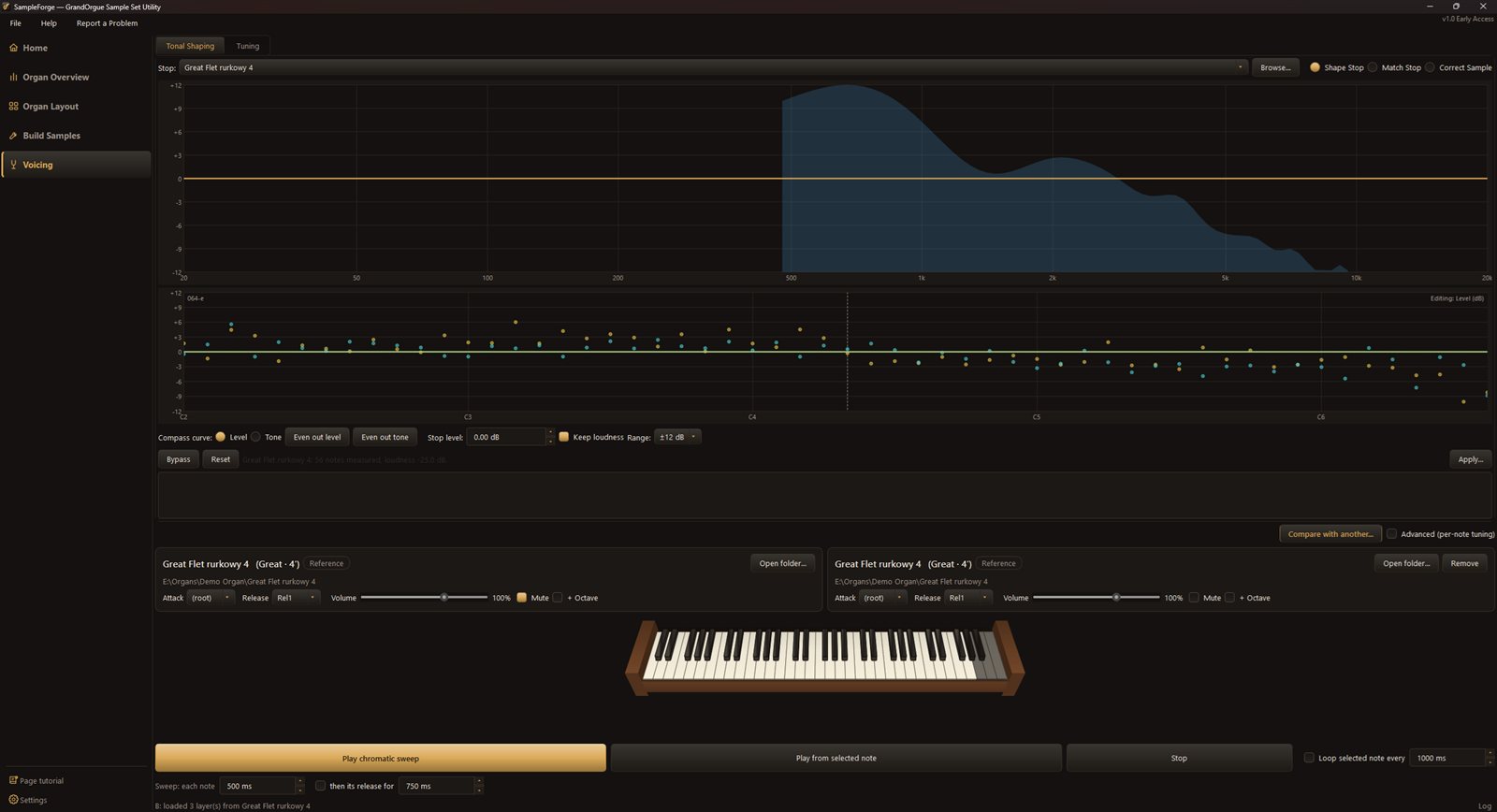
SampleForge VPO Demo coming soon

Composite organ creation, made easy.

SampleForge VPO lets you take ranks of recorded pipes from different sample sets and put them together into one organ. It matches their tuning, levels and acoustics so they sound like one instrument, and gives you a console designer with practically endless customisation.

Demo coming soon ▶  Watch the first look

Built for Windows 10 and 11.

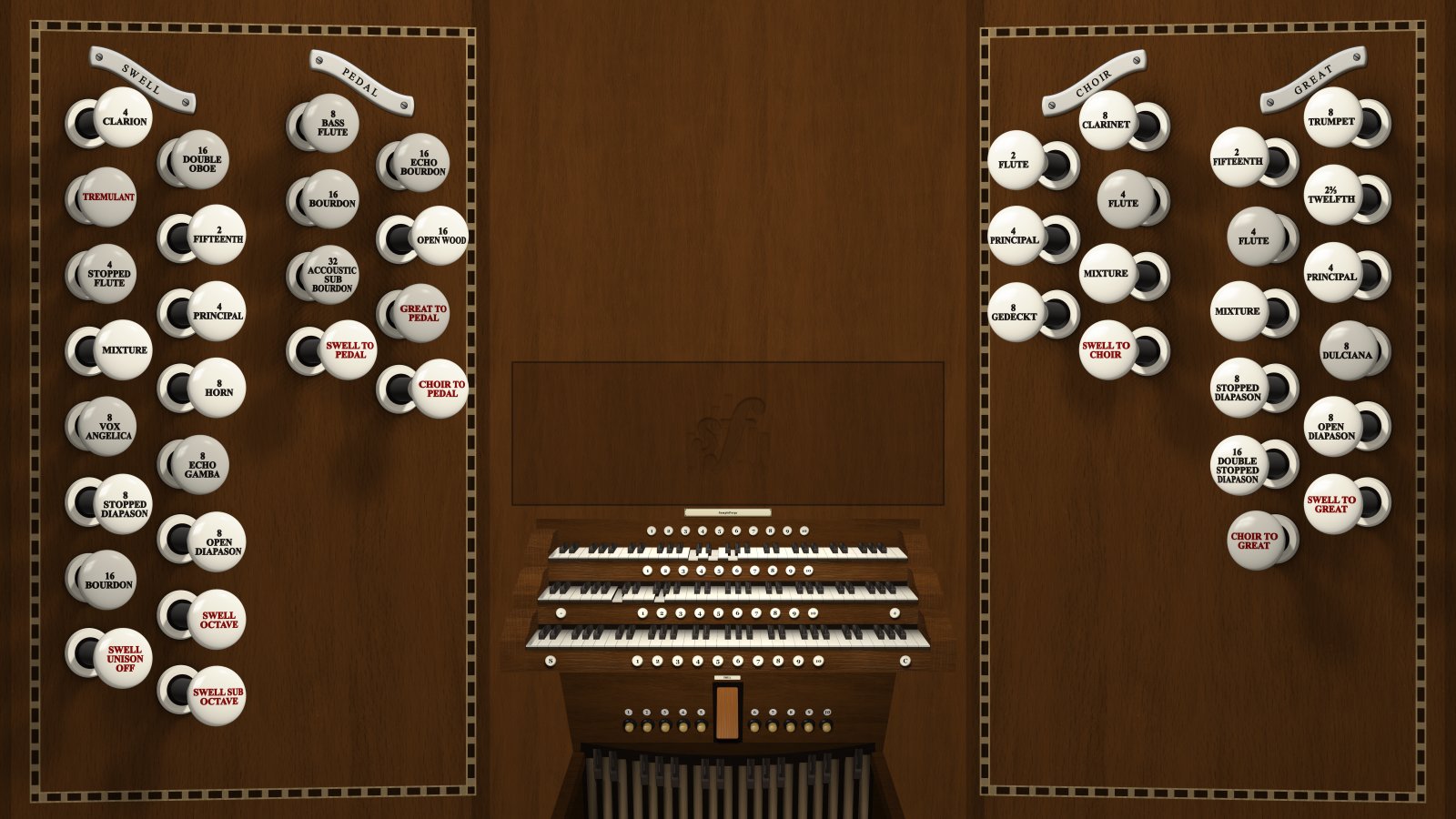
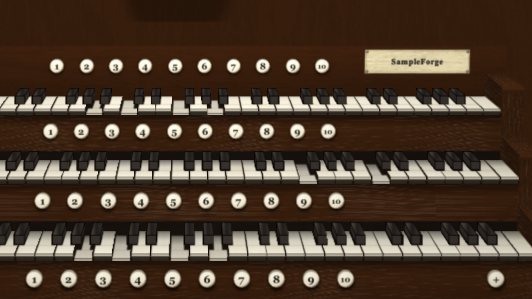
A three-manual console with drawstop jambs and the SampleForge logo on the music desk
A three-manual console inspired by the English tradition.
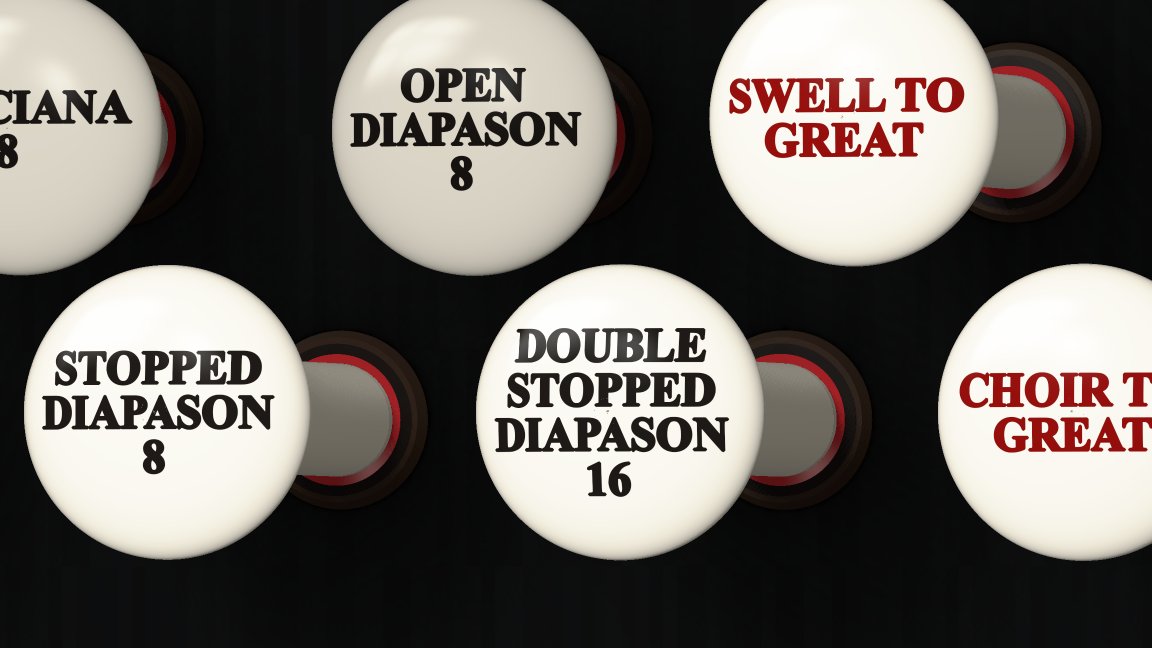
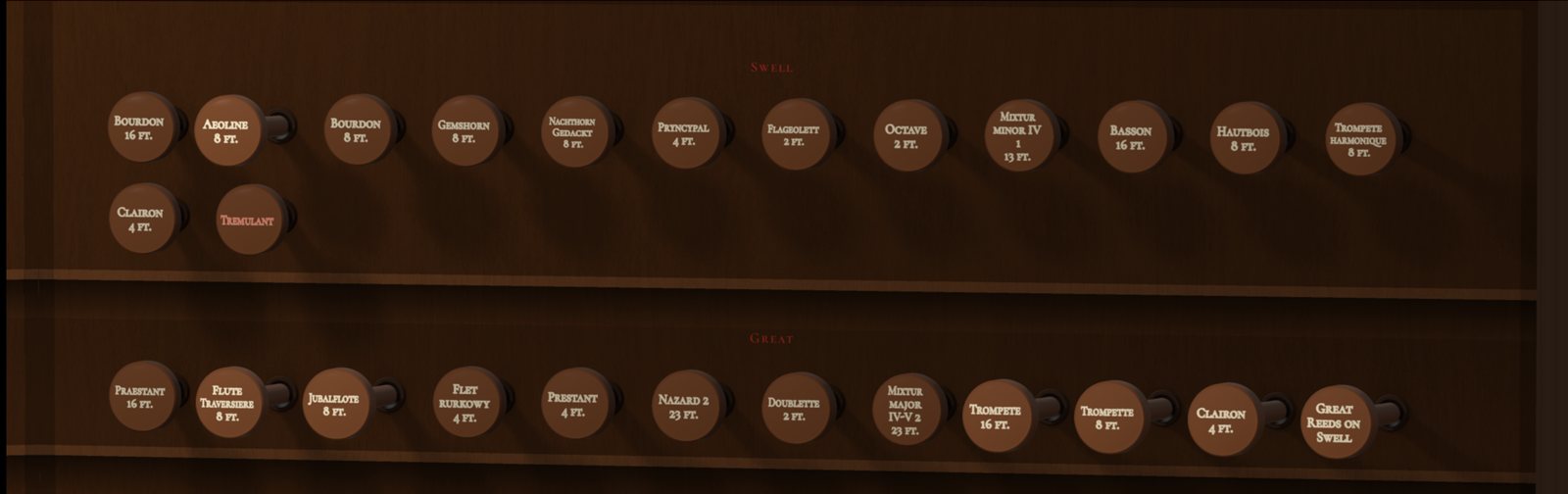
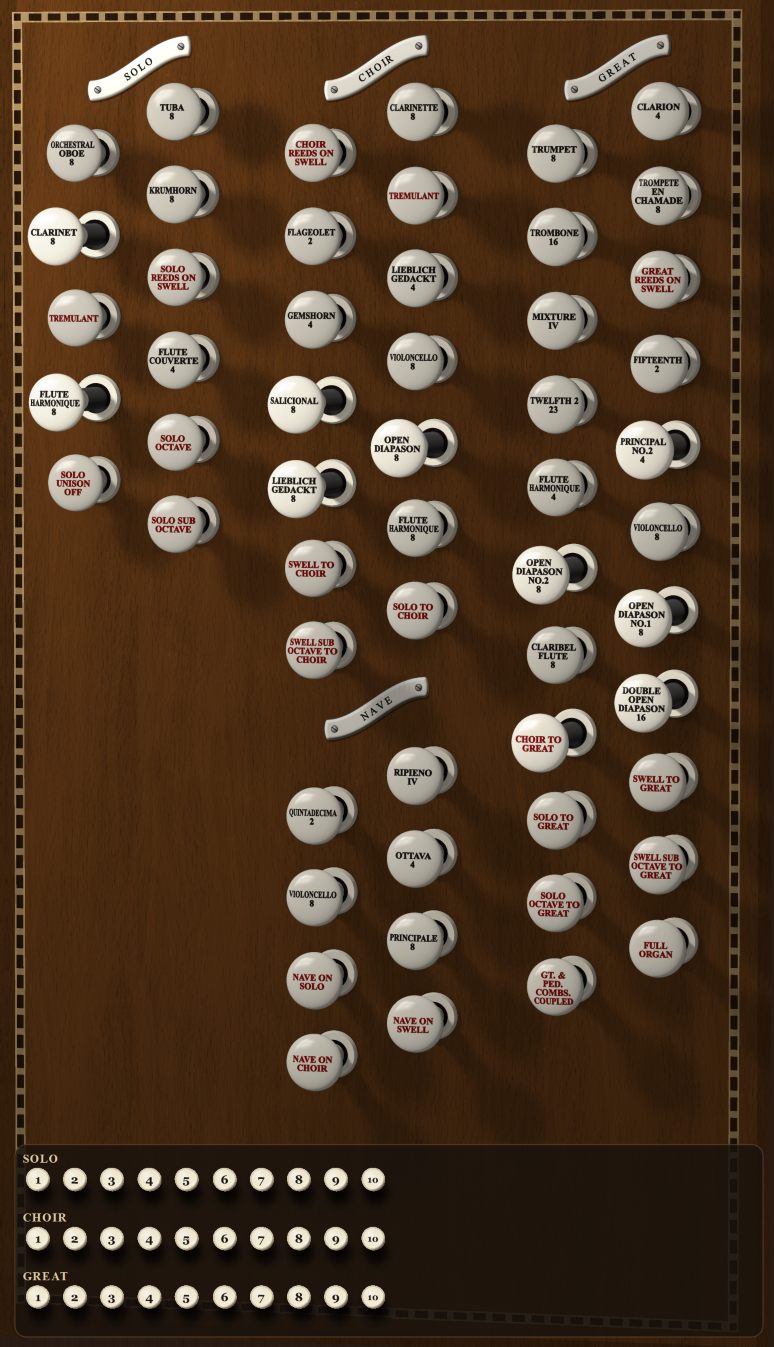
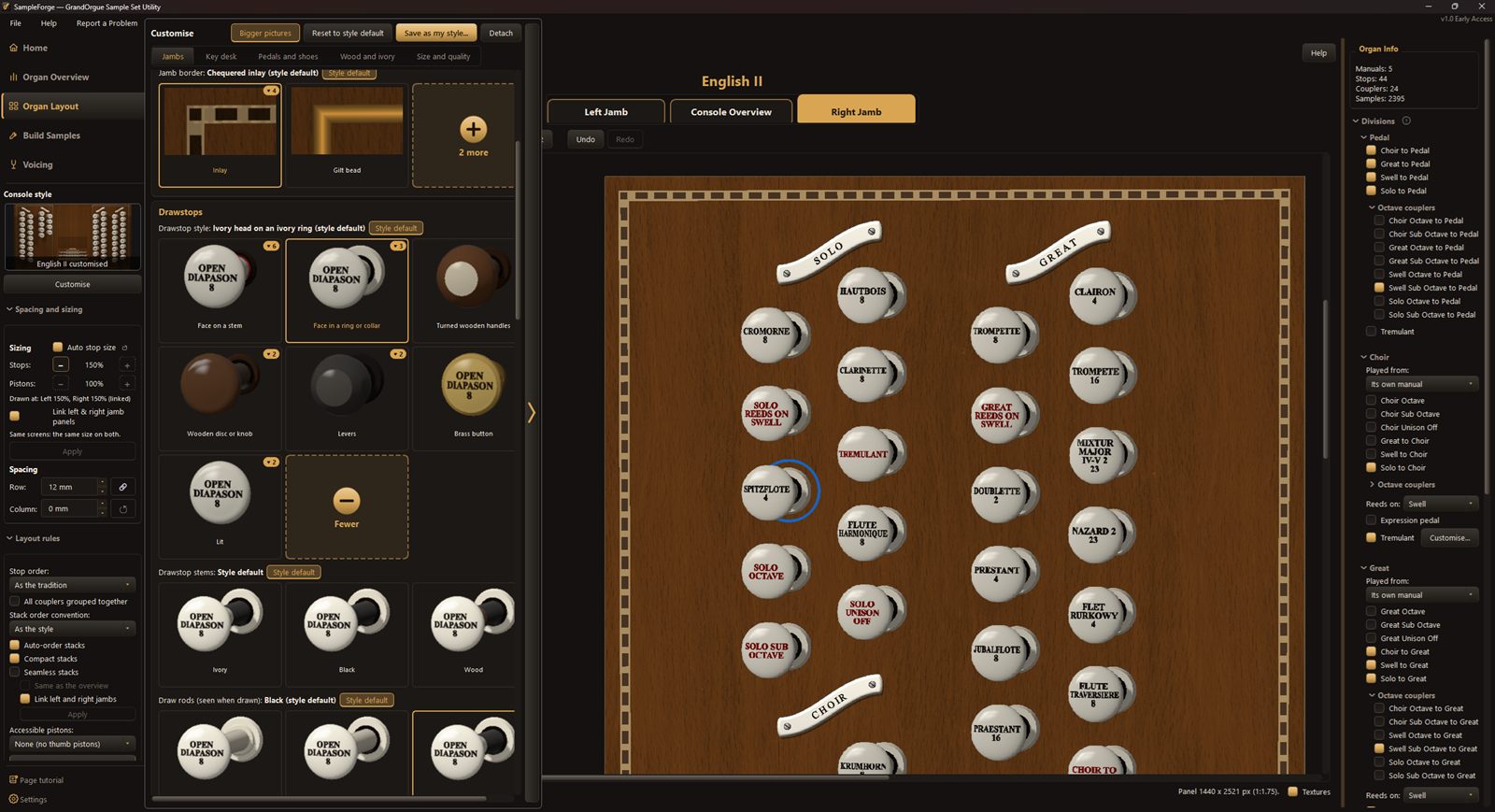
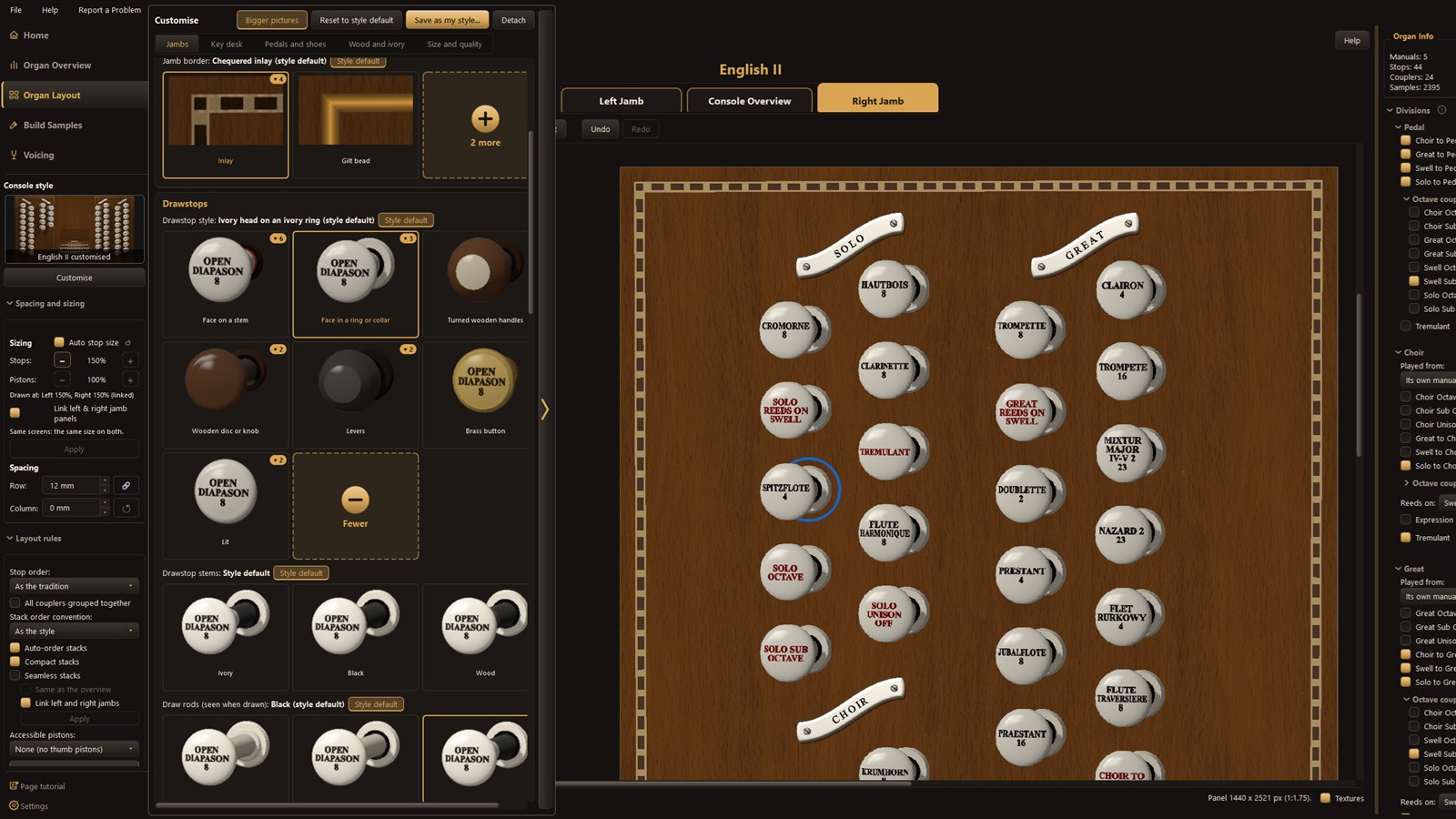
Close-up of drawstops, with coupler heads in red
Drawstops up close, with coupler heads in red.
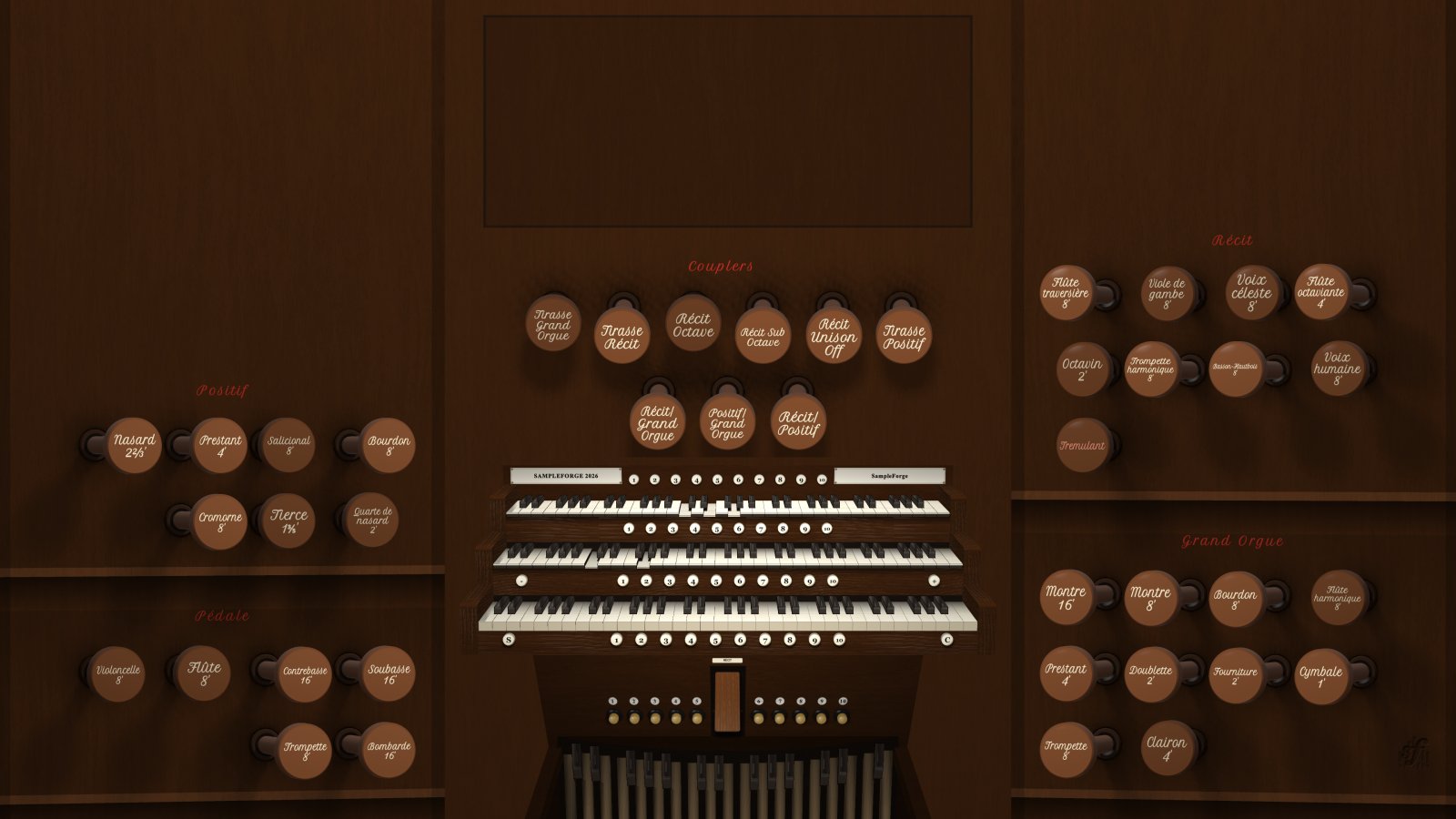
A three-manual console with French stop names and a coupler row above the manuals
A three-manual console inspired by the French tradition.
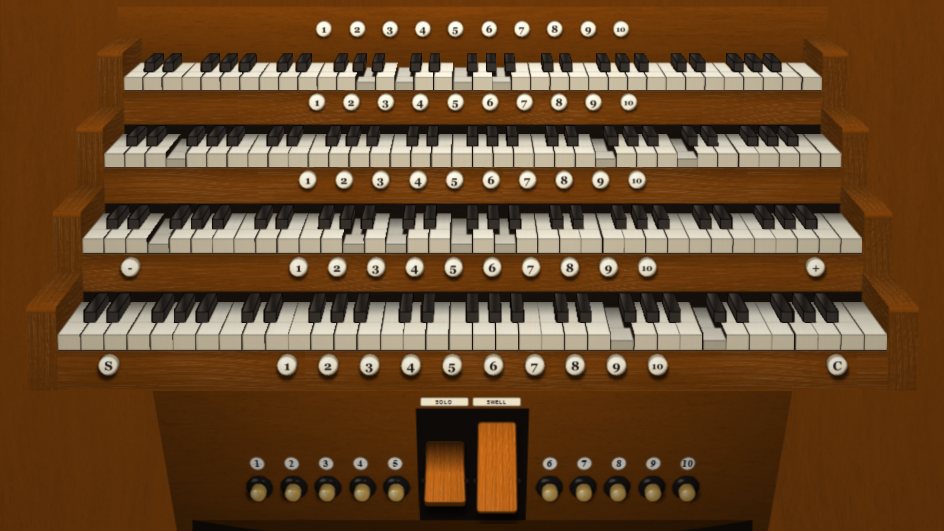
Four manuals with thumb pistons, expression pedals and toe pistons
The key desk with thumb pistons, expression pedals and toe pistons.
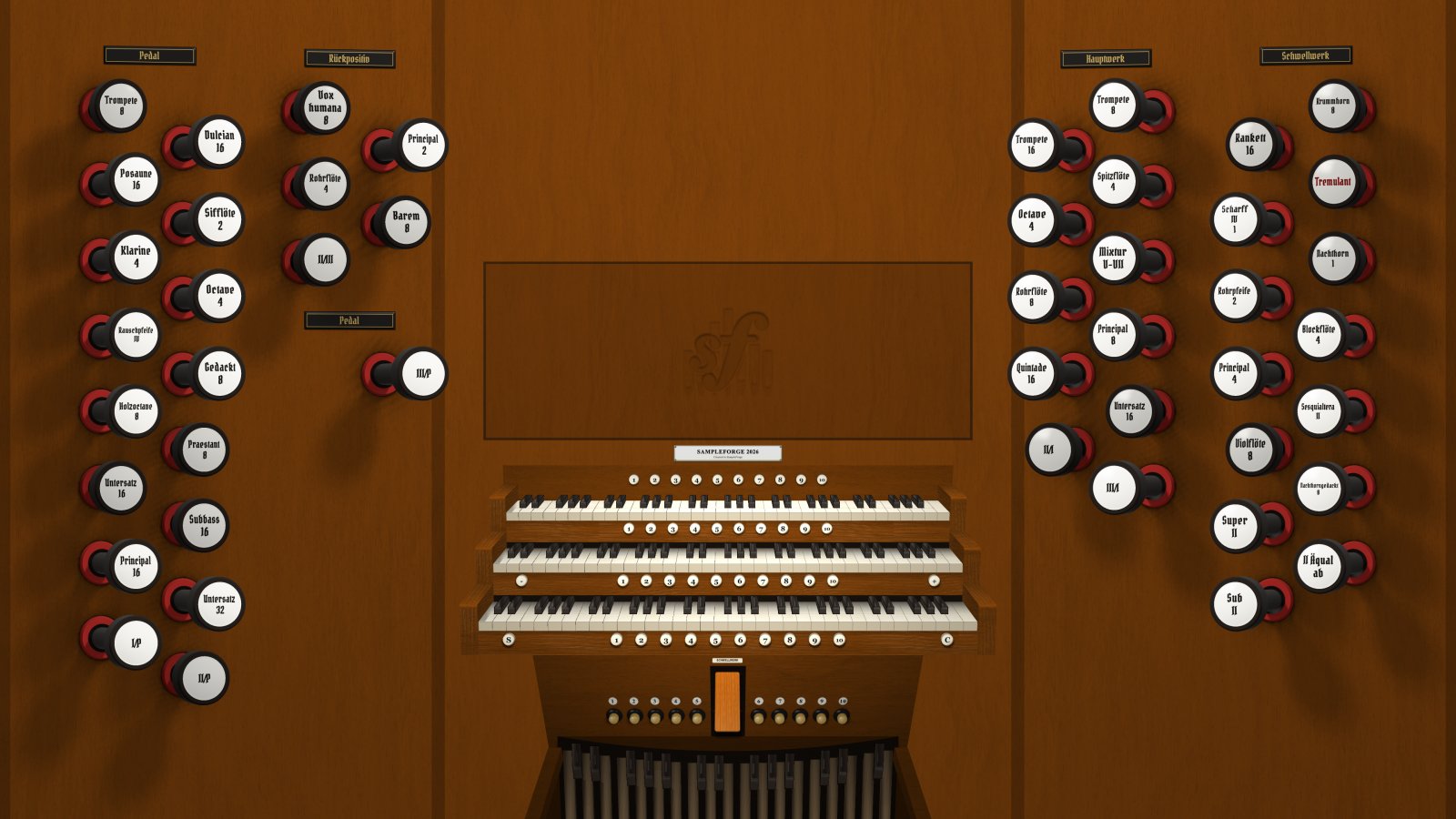
A three-manual console with German stop names either side
A three-manual console inspired by German organs.
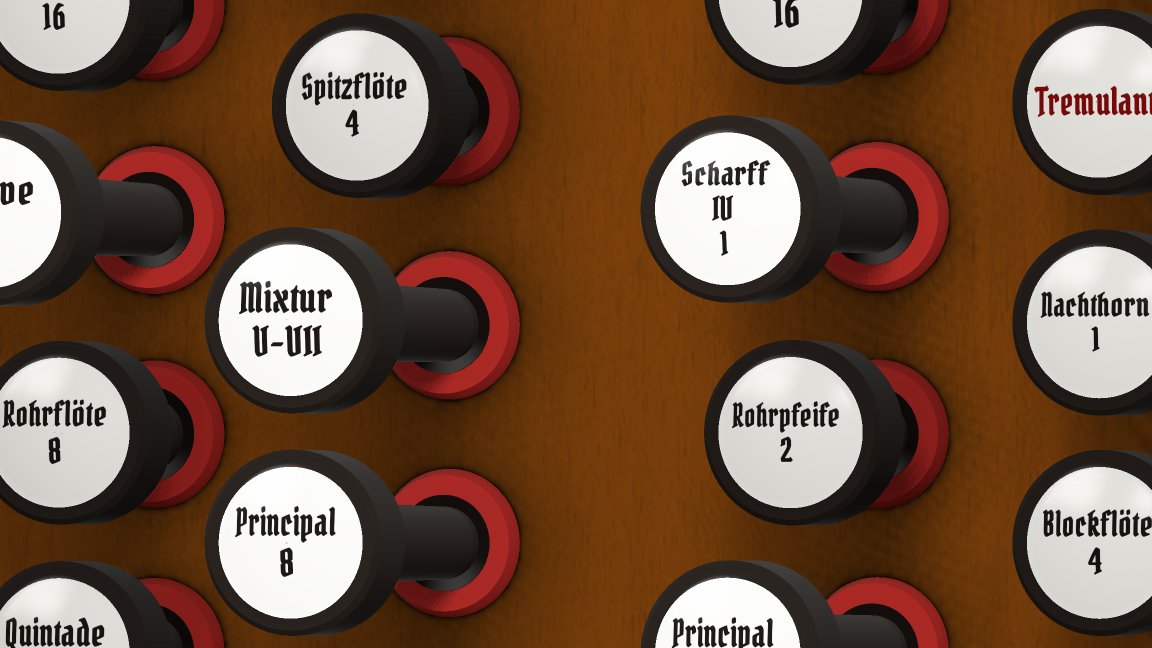
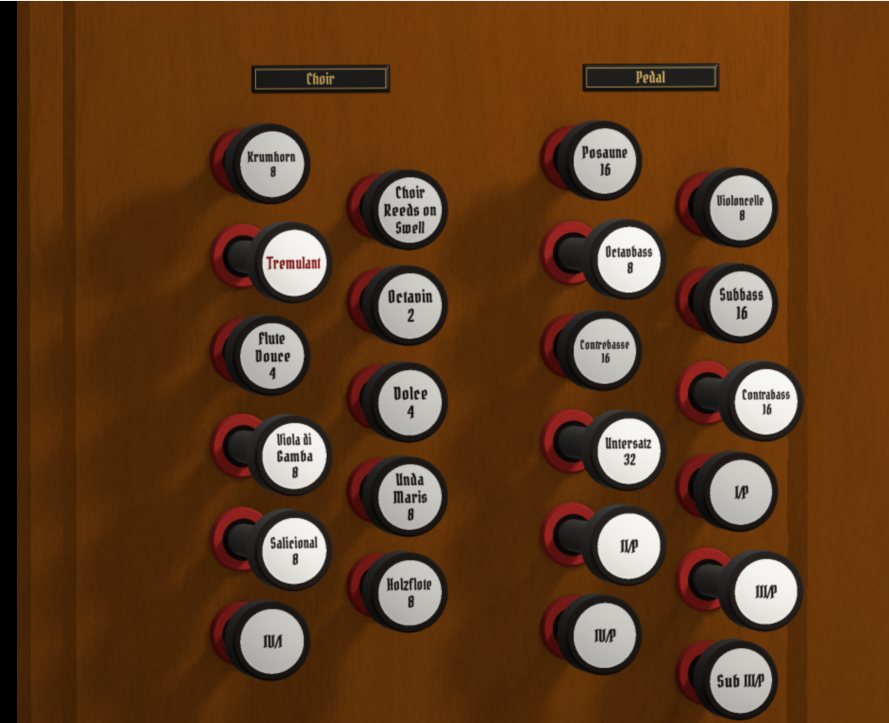
Close-up of drawstops with German stop names
Drawstops inspired by German consoles.
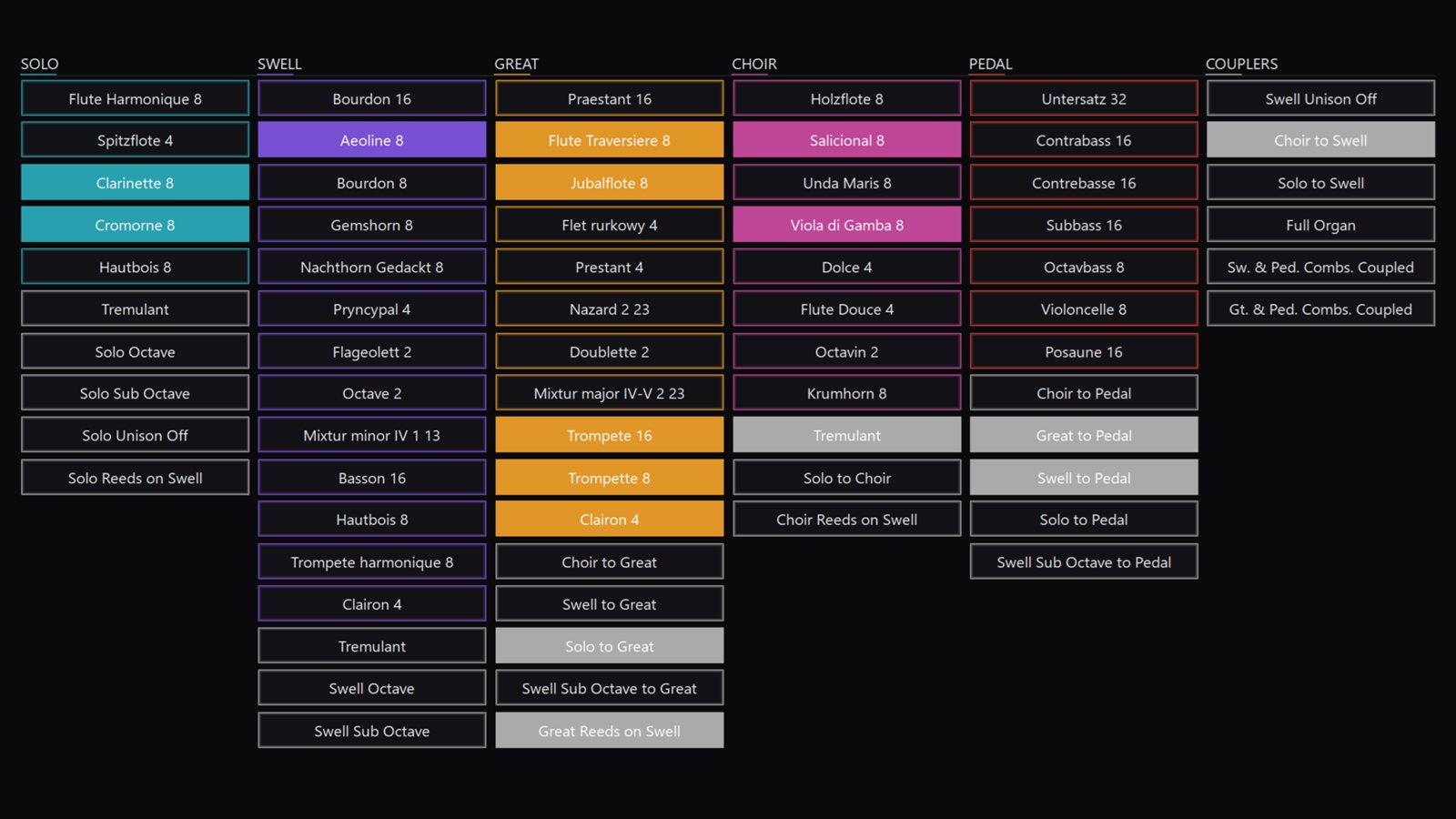
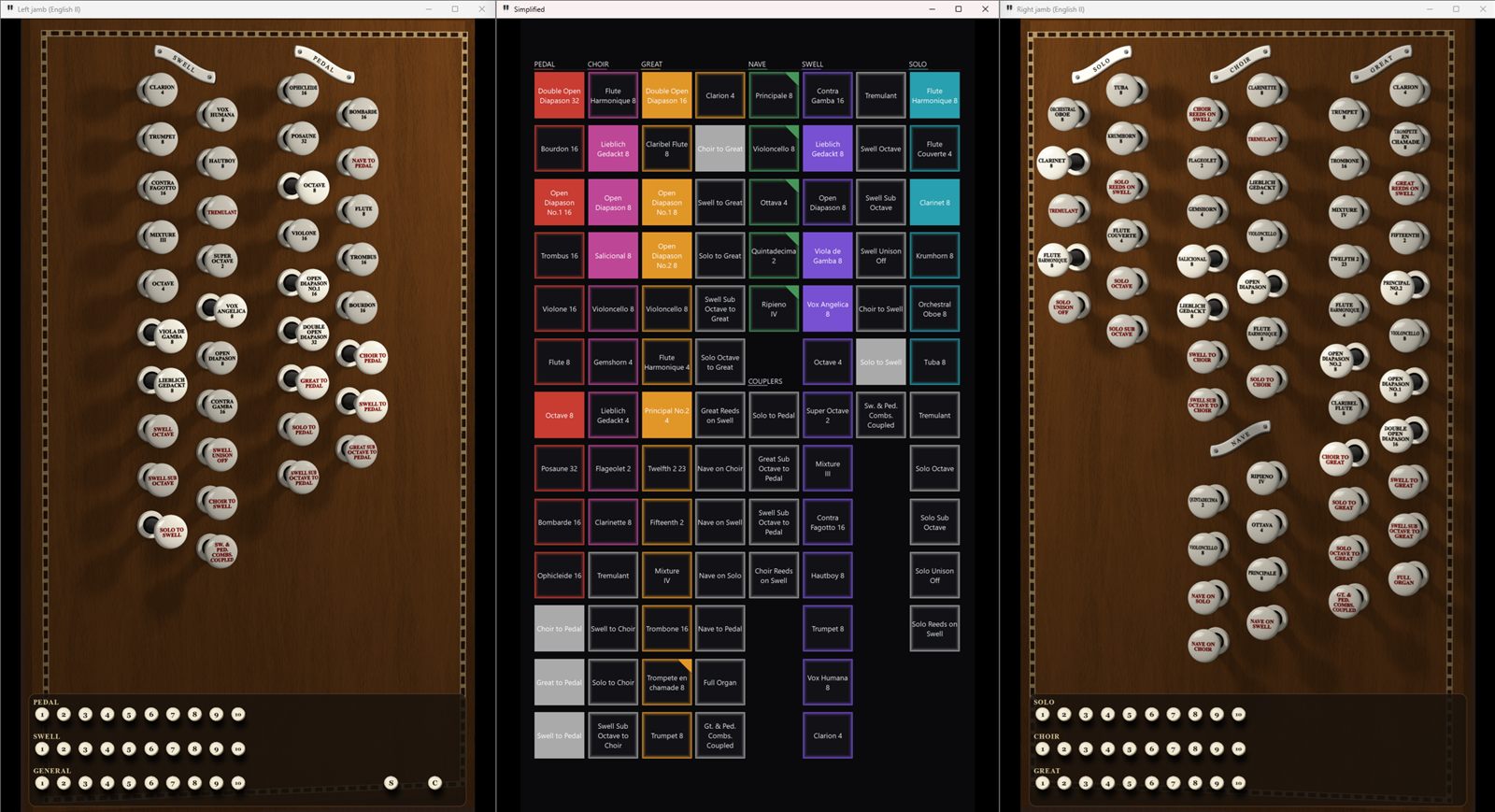
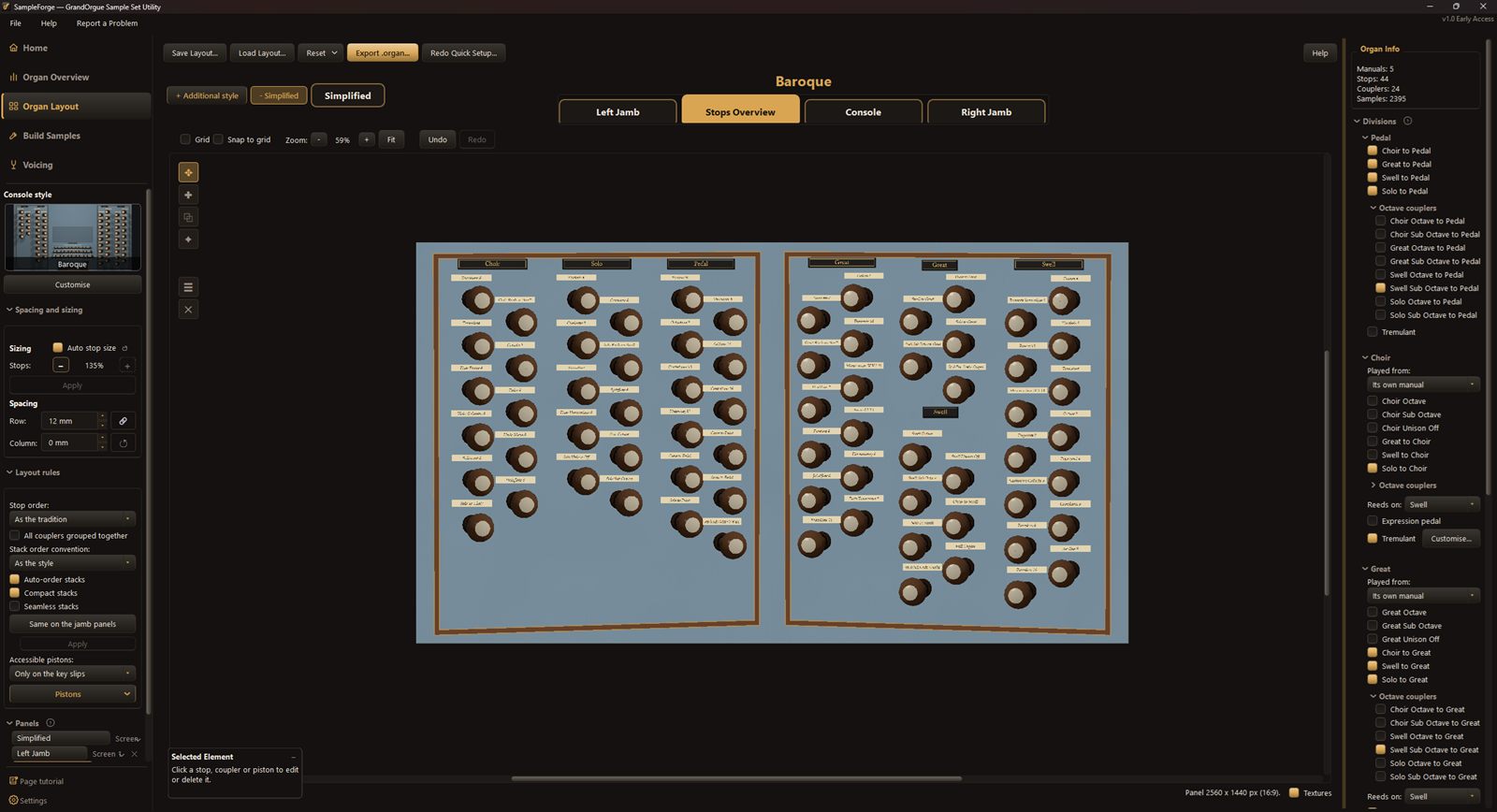
A colour-coded stop panel arranged by division
A simplified, colour-coded stop panel for a touchscreen.
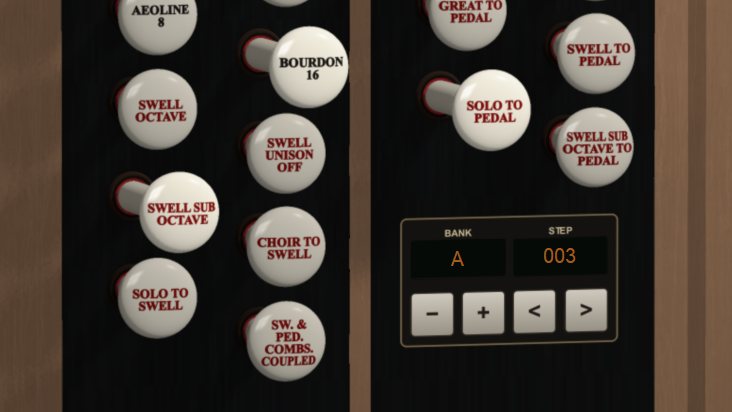
Close-up of drawstops beside a combination bank and step display
Drawstops beside the combination bank and step display.
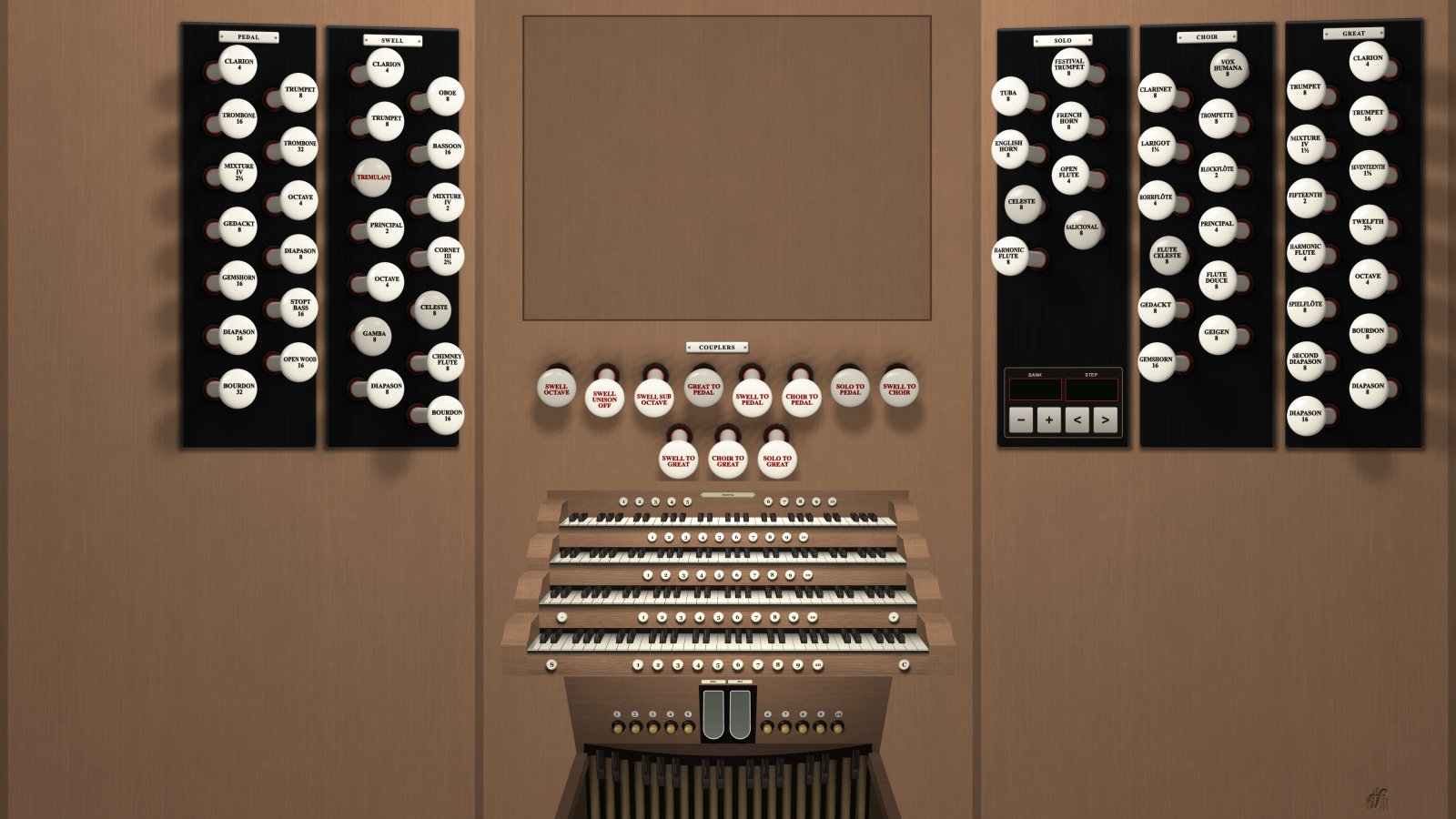
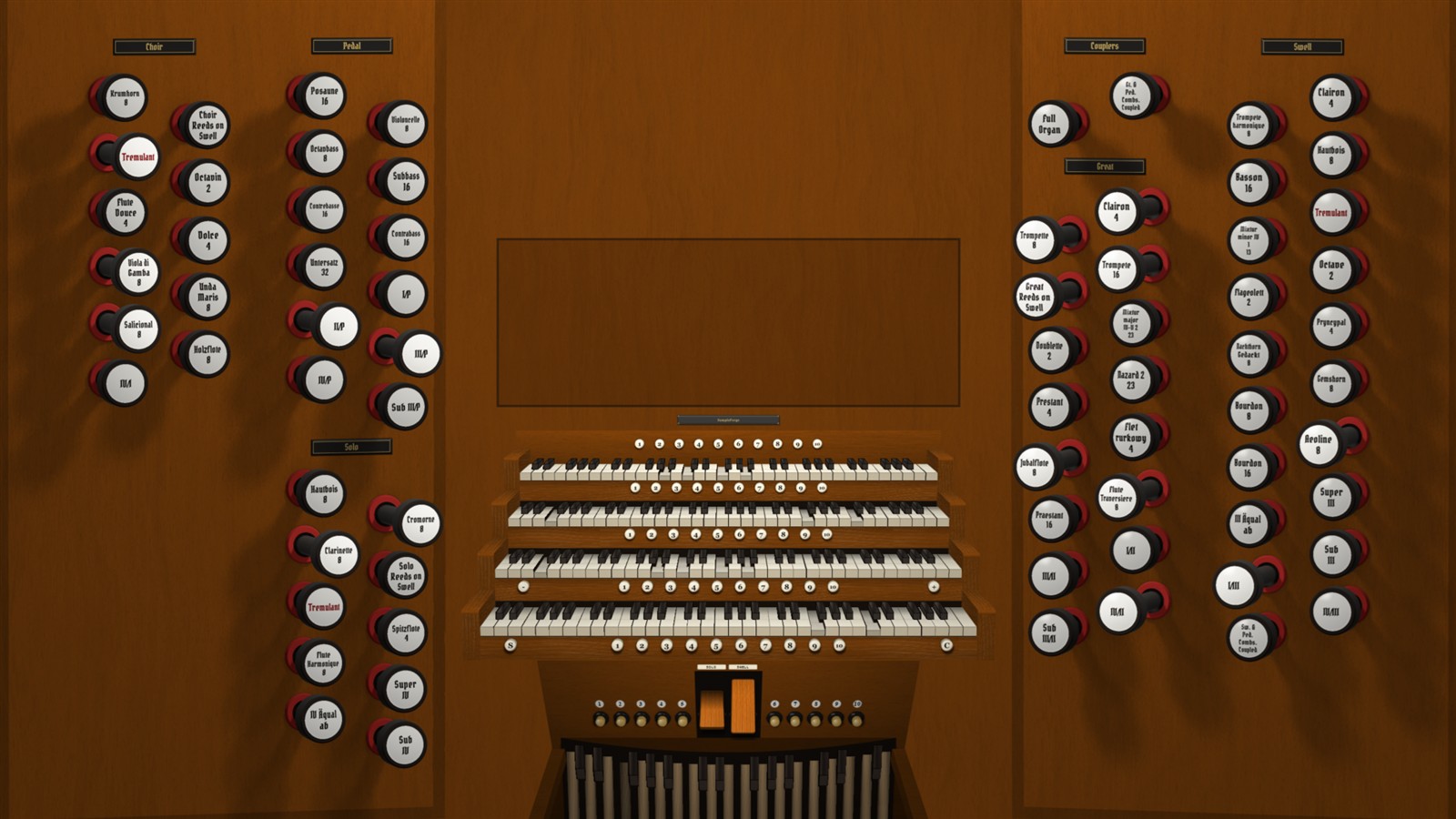
A four-manual console with black stop jambs, a coupler row and a combination display
A four-manual console with black stop jambs, inspired by the English tradition.
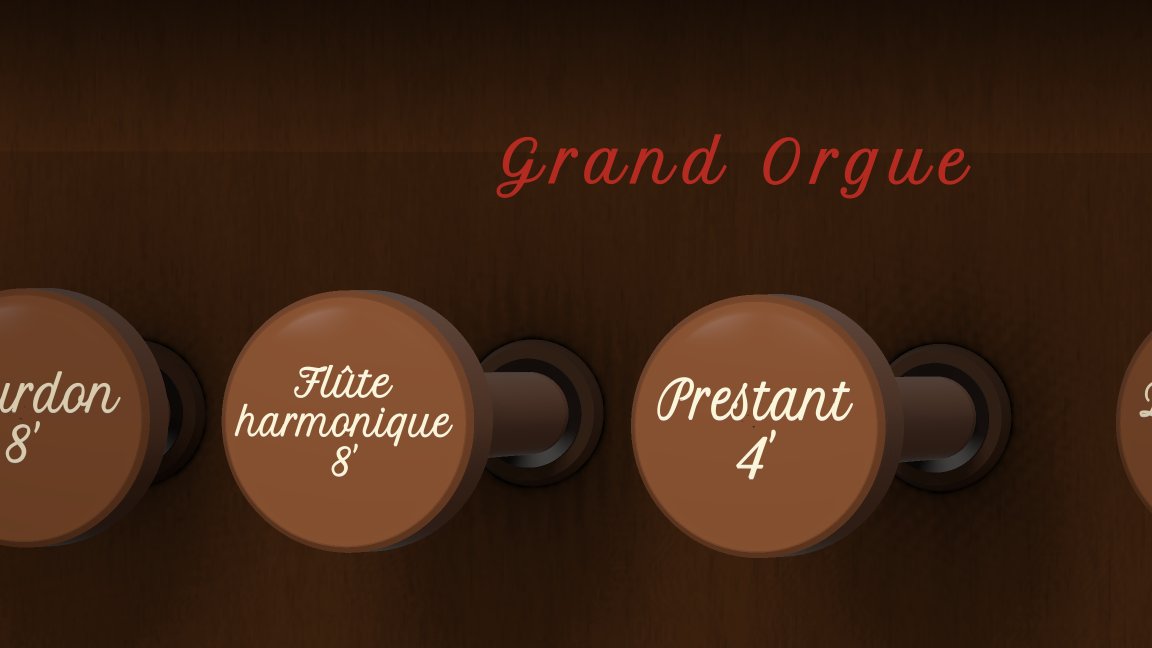
Close-up of Grand Orgue drawstops with French stop names
Grand Orgue drawstops inspired by the French tradition.
Become a tester A few early testing places, open to organists everywhere and at every level. See what's involved. Get release news Tester places are full for now. Email us and we'll tell you when SampleForge is released.

First look at SampleForge

Tuning, blending and console design, all in one program. Here's what's coming.

Footage is from a pre-release build. The audio was made inside SampleForge from three sample sets by Piotr Grabowski, used with his permission. The video loads from YouTube when you press play. Watch it on YouTube instead.

From sample sets to finished organ

Five stages, all in one program. Choose a step to see what SampleForge does there.

Assemble

Bring in ranks from the sample sets you're licensed to use.

Combine ranks from any source
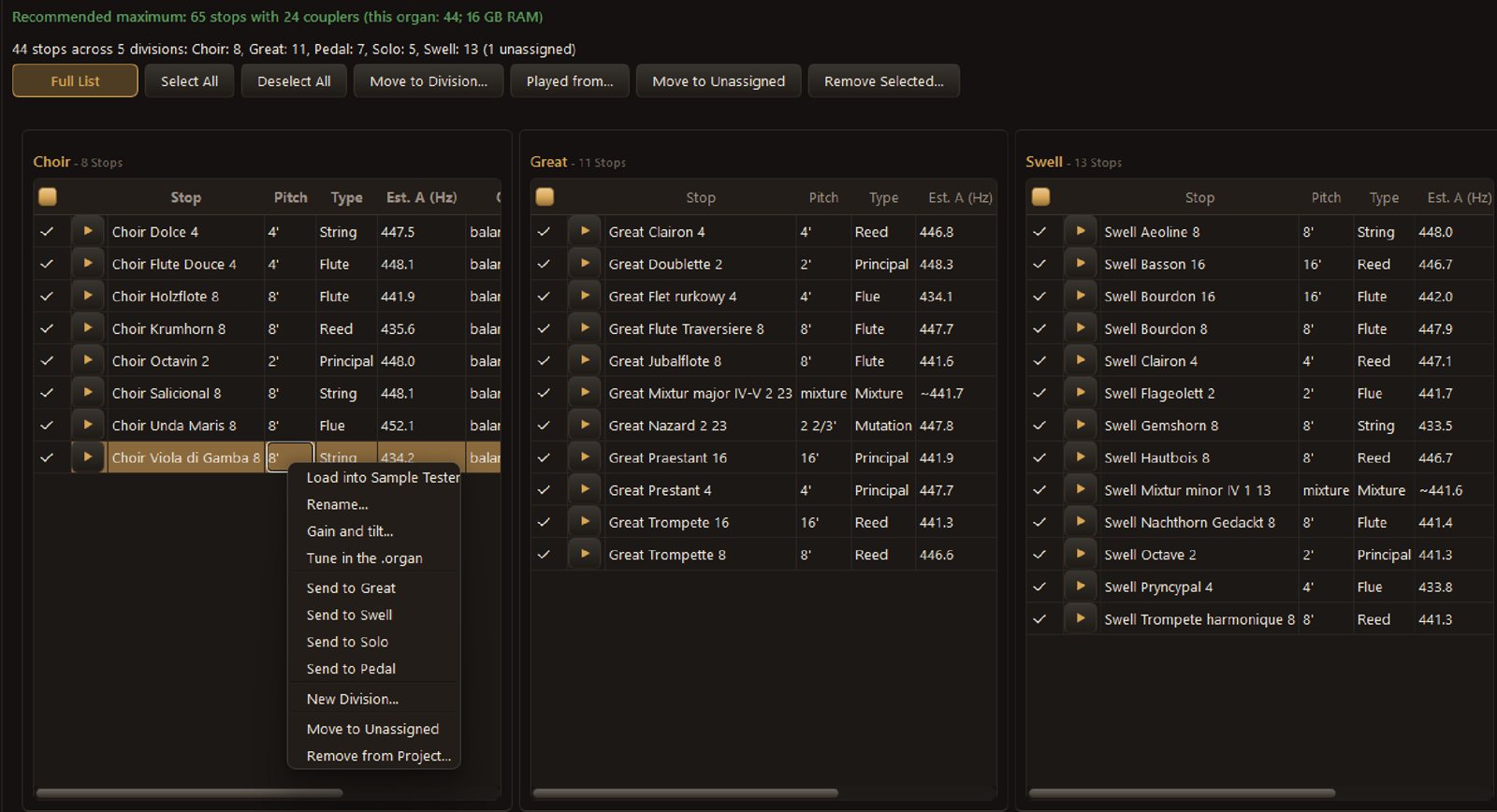
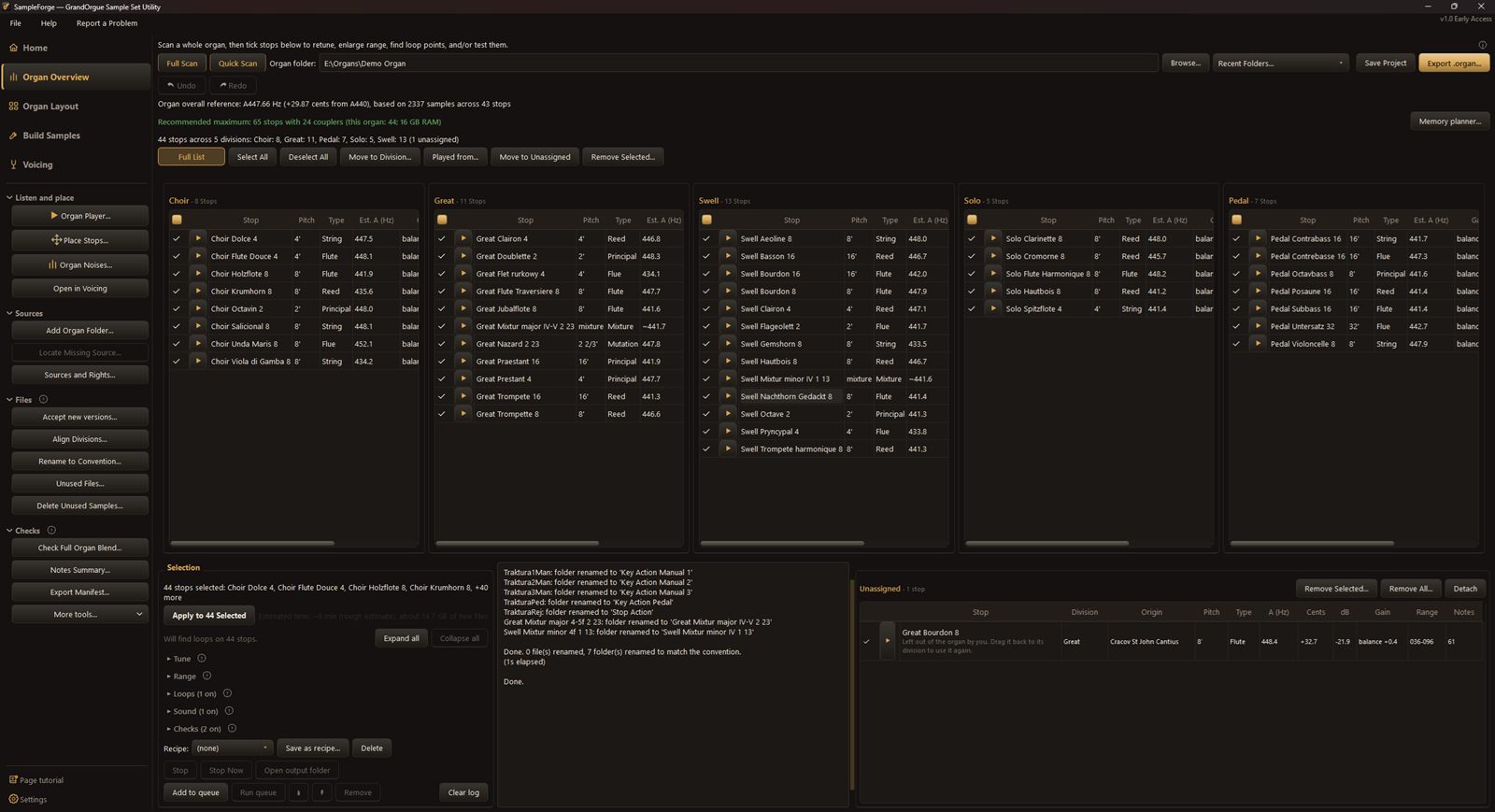
Add several organ folders to one project and choose stops from each. Each stop keeps a record of the sample set it came from, and stops can be moved between divisions and renamed to one naming style.
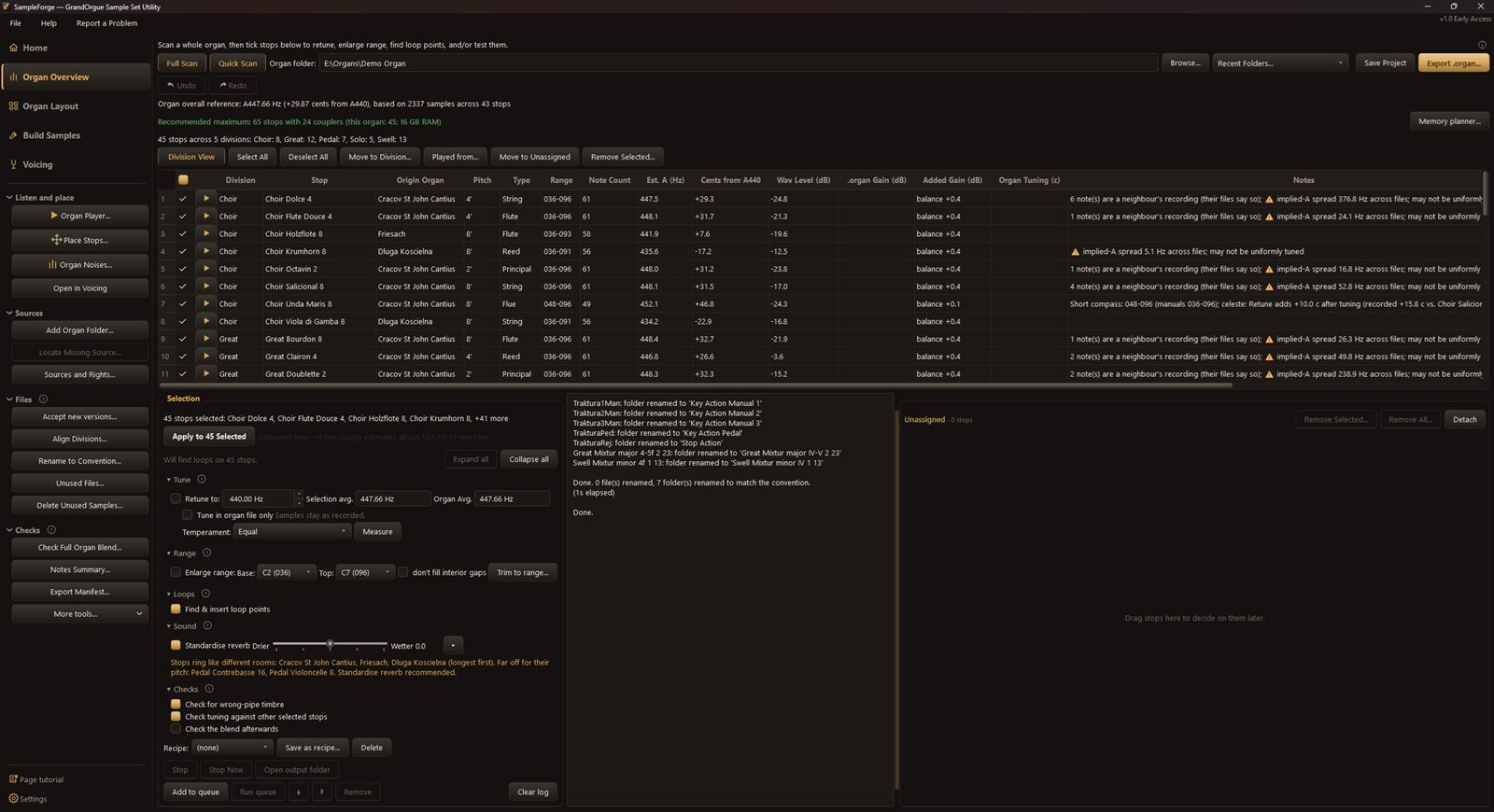
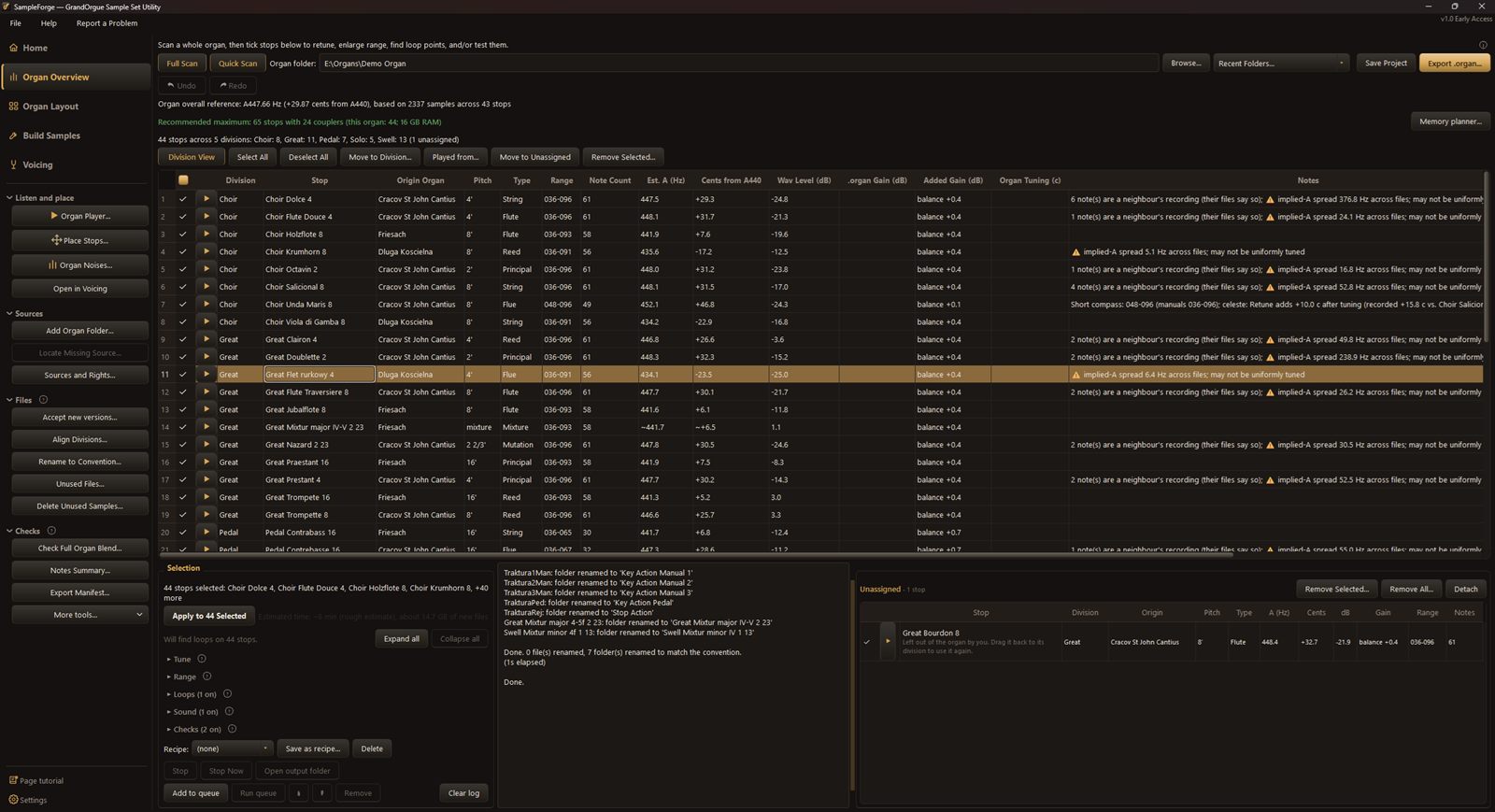
Overview and division views
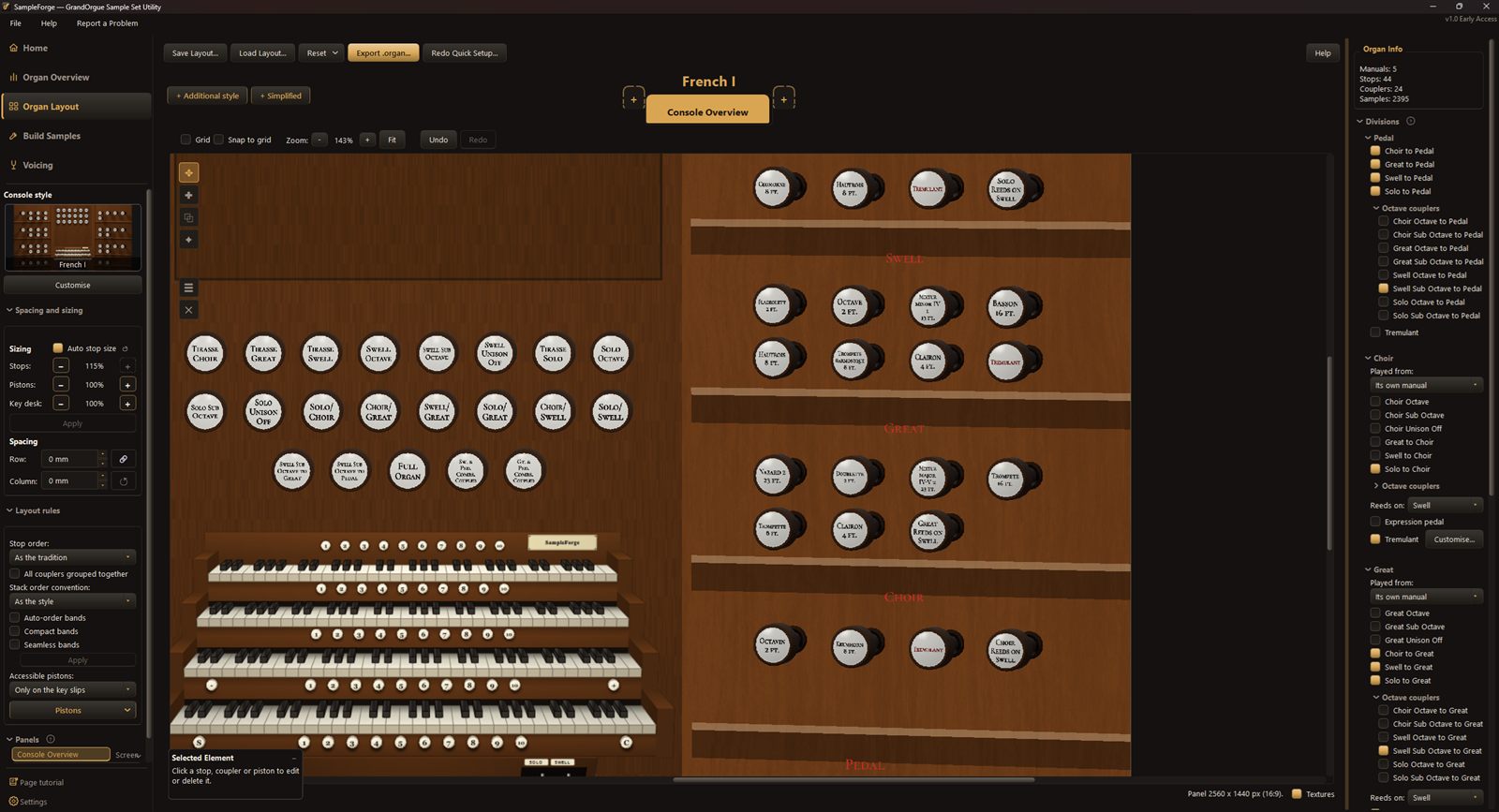
Switch between the Organ Overview, with every stop in one table, and a view of each division, to see how the organ is built up and keep it balanced.

Tune

Match pitch, temperament and compass.

Tuning first
Every sample is measured for its estimated A, its offset in cents from A440 and the spread across the rank. Retune a selection to a common pitch in any temperament, or apply the tuning in the organ file only and leave the samples as recorded. Celestes are retuned like any other stop, then given their beat at the end.
Range, loops and releases
Choose the lowest and highest note you want and SampleForge fills in the missing ones. Loop points can be found and written to the samples, and jobs can be queued across the whole organ.

Blend

Balance levels and room so it sounds like one organ.

One room, one sound
See which stops ring like which rooms and standardise the reverb so they sit together. Checks look for wrong-pipe timbre, tuning against the other stops, and the blend of the full organ.
Place stops in a building
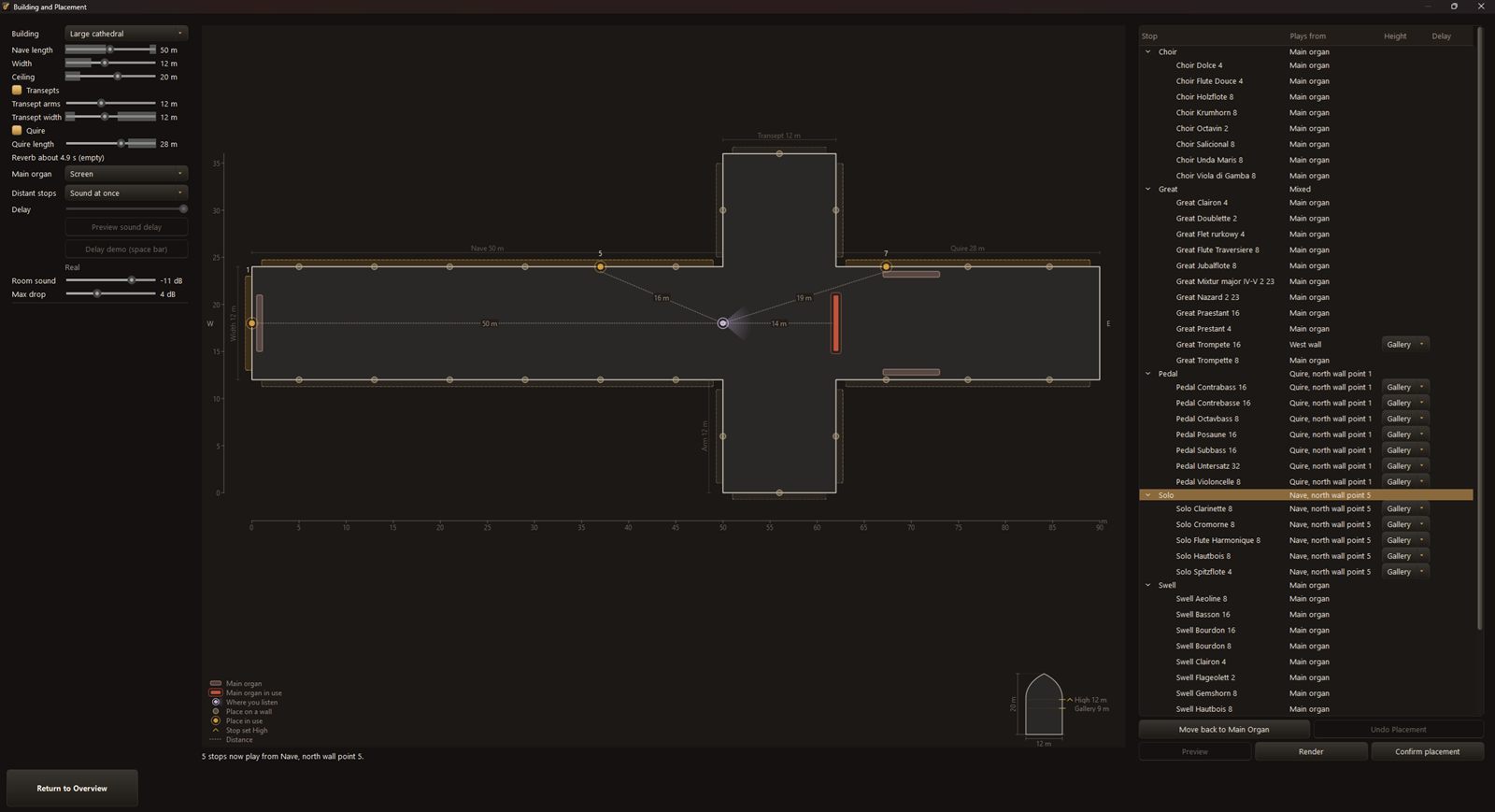
Start from a building, from a small church to a large cathedral with transepts and a quire, then use the sliders to shape it exactly as you want. Put divisions or single stops on walls and galleries, and SampleForge works out distance, level and delay from where you sit.

Design

Build the console in the style you want.

Design the console
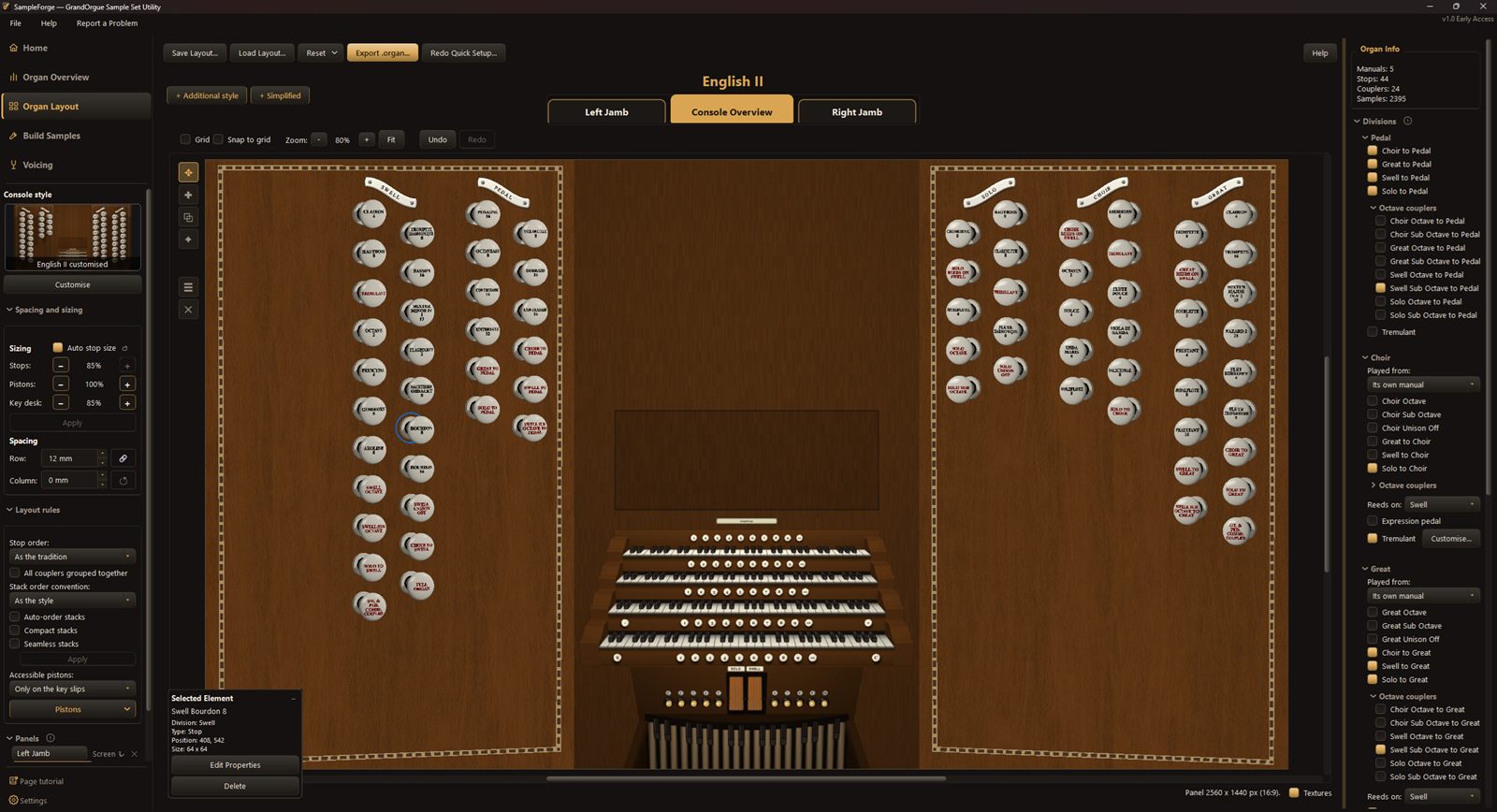
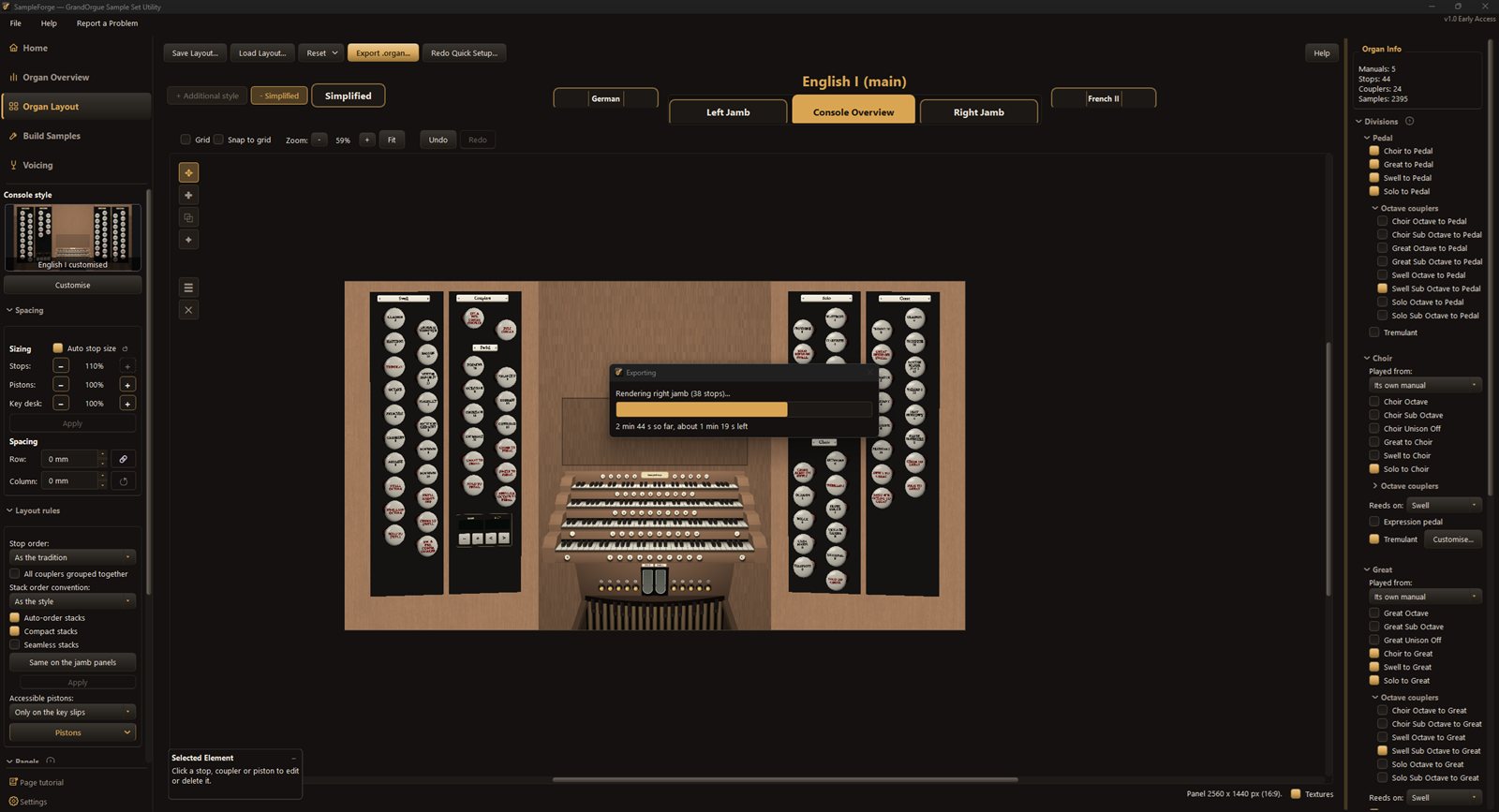
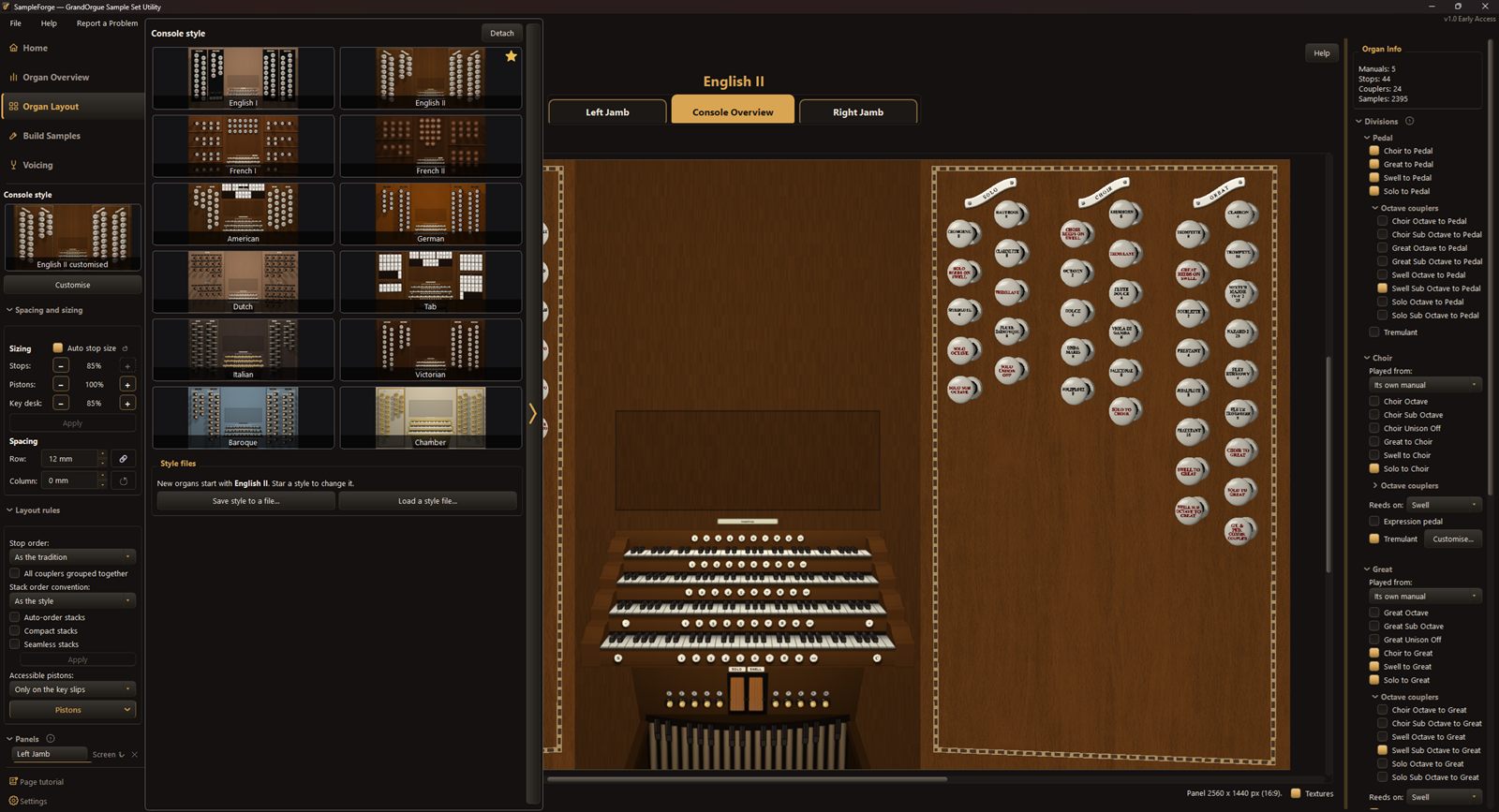
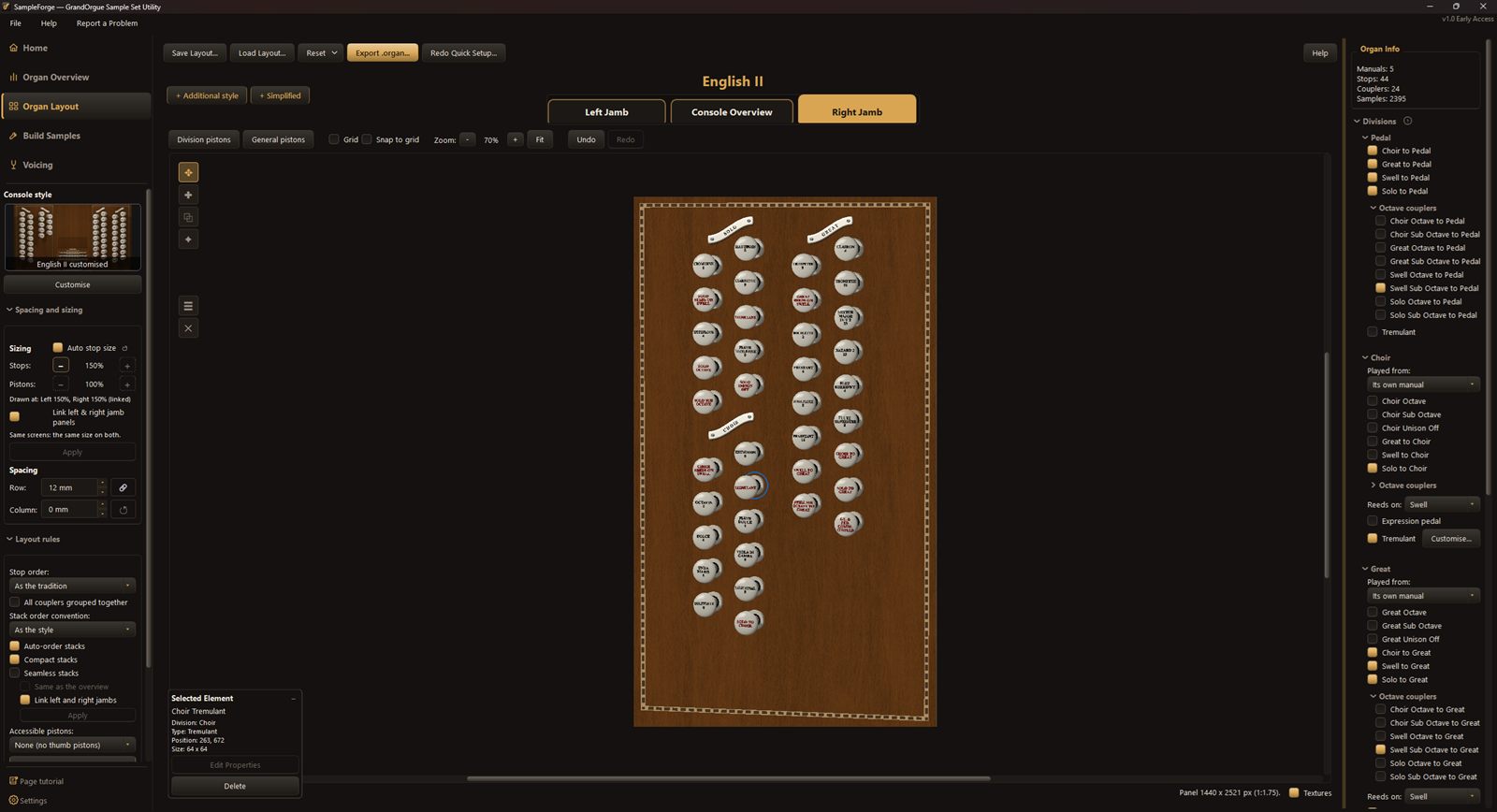
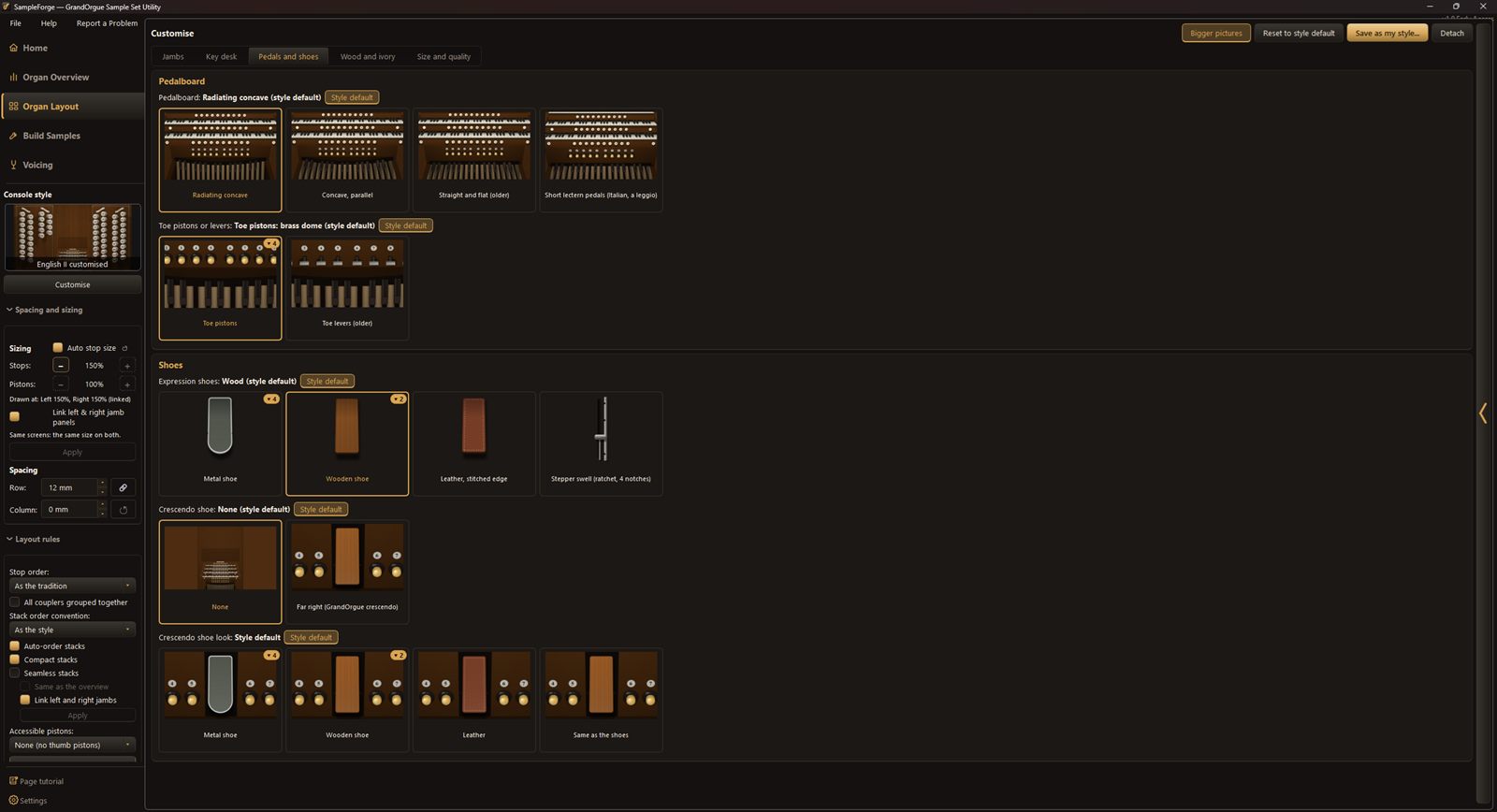
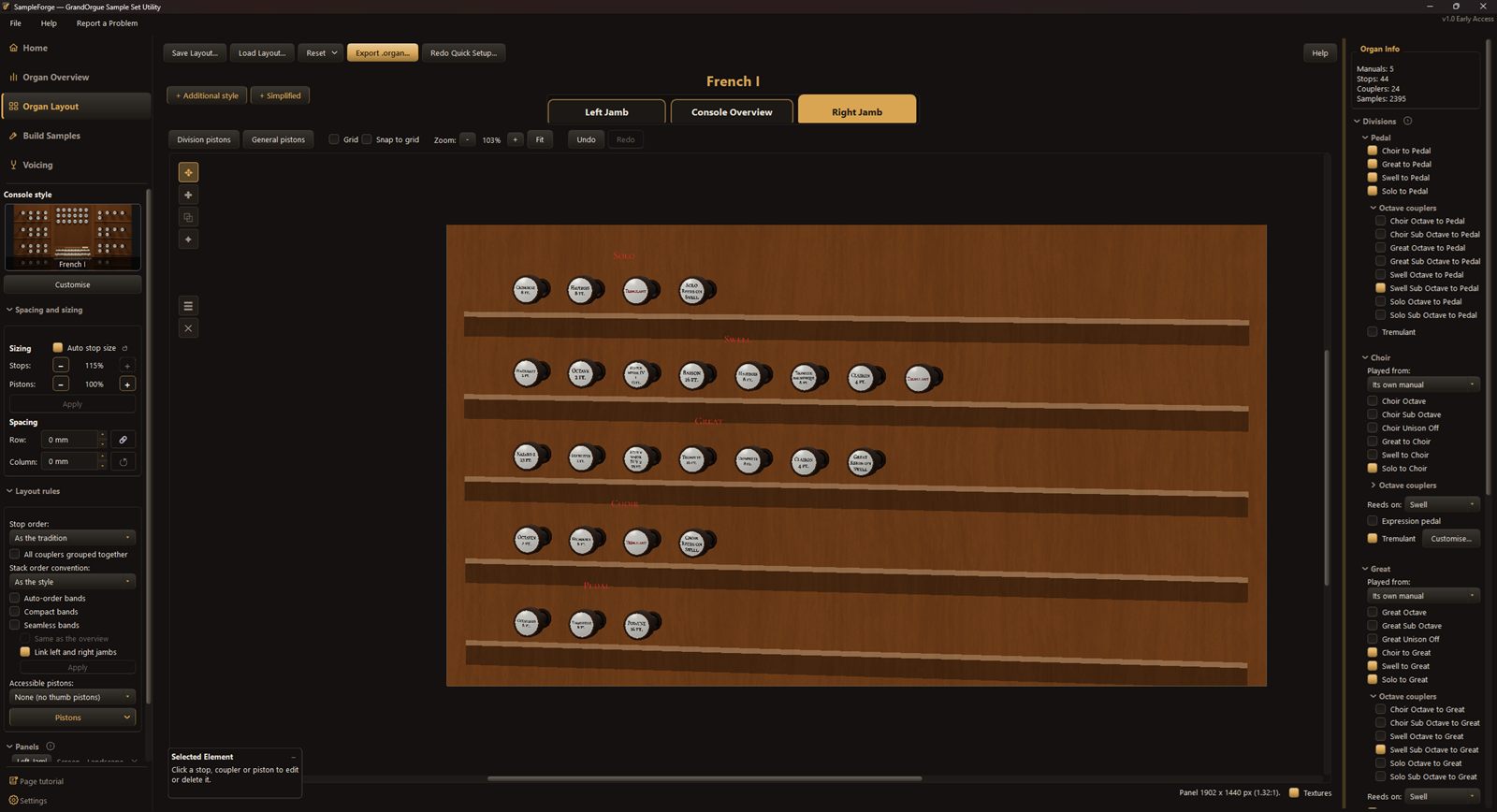
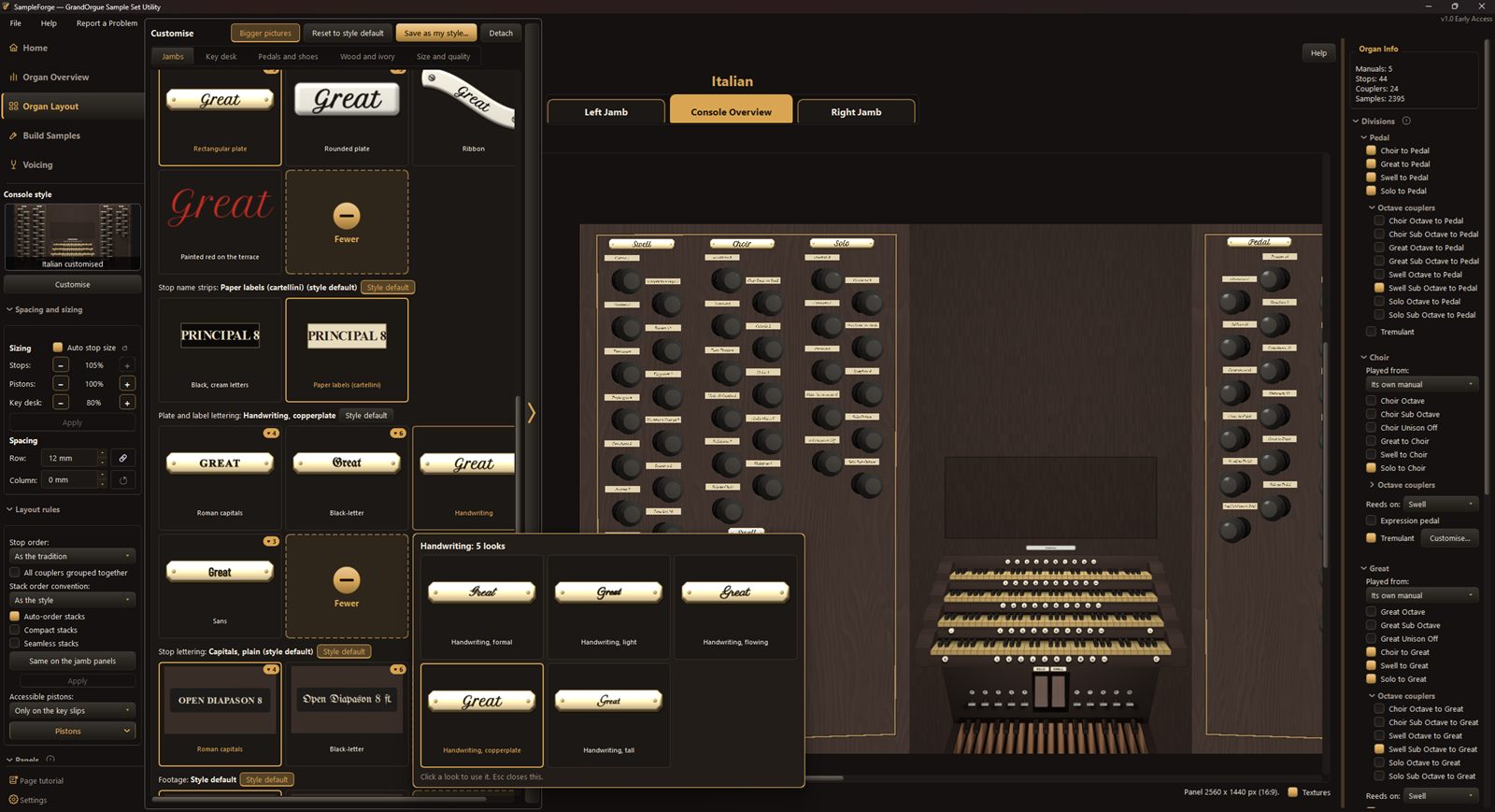
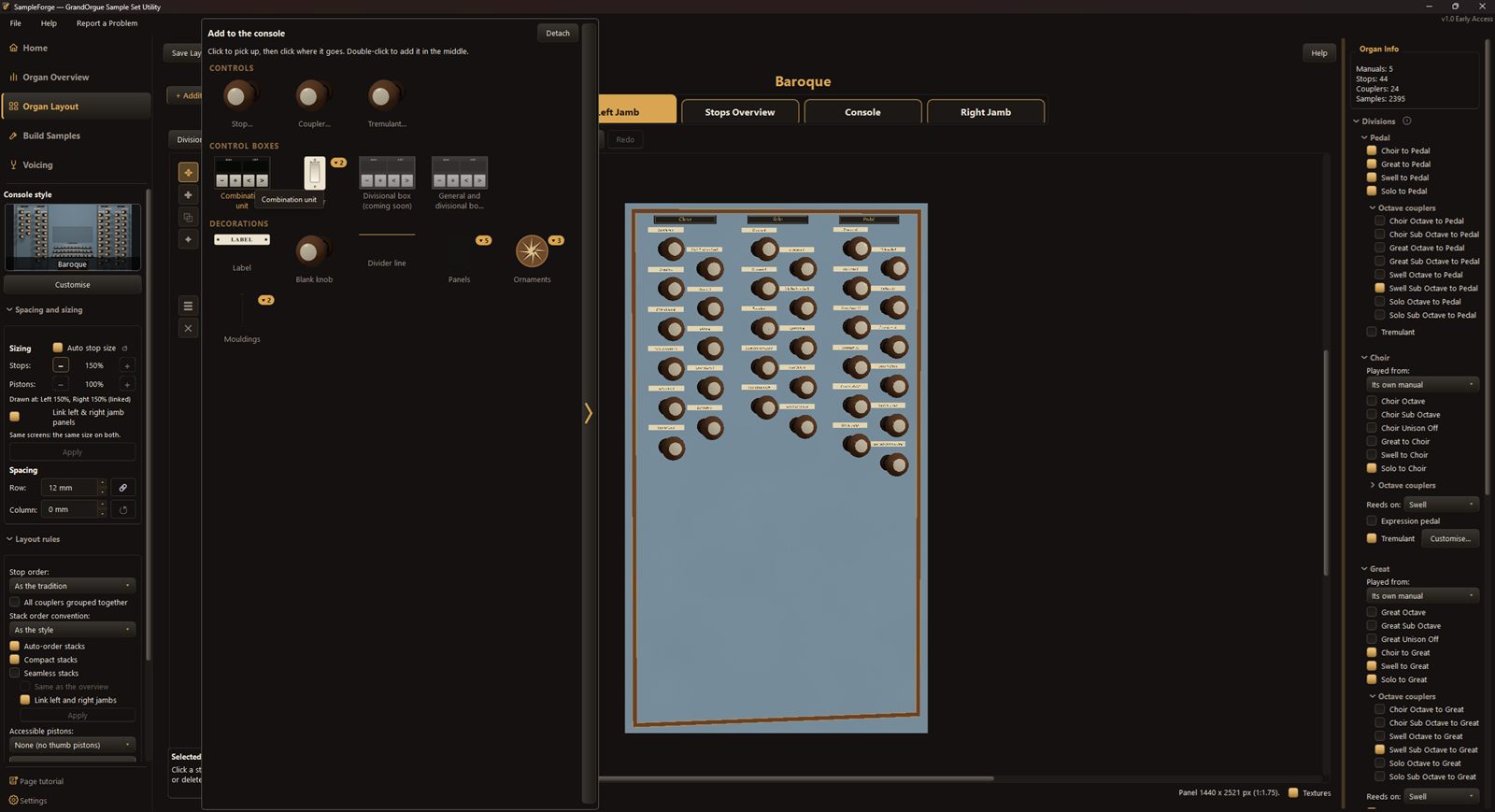
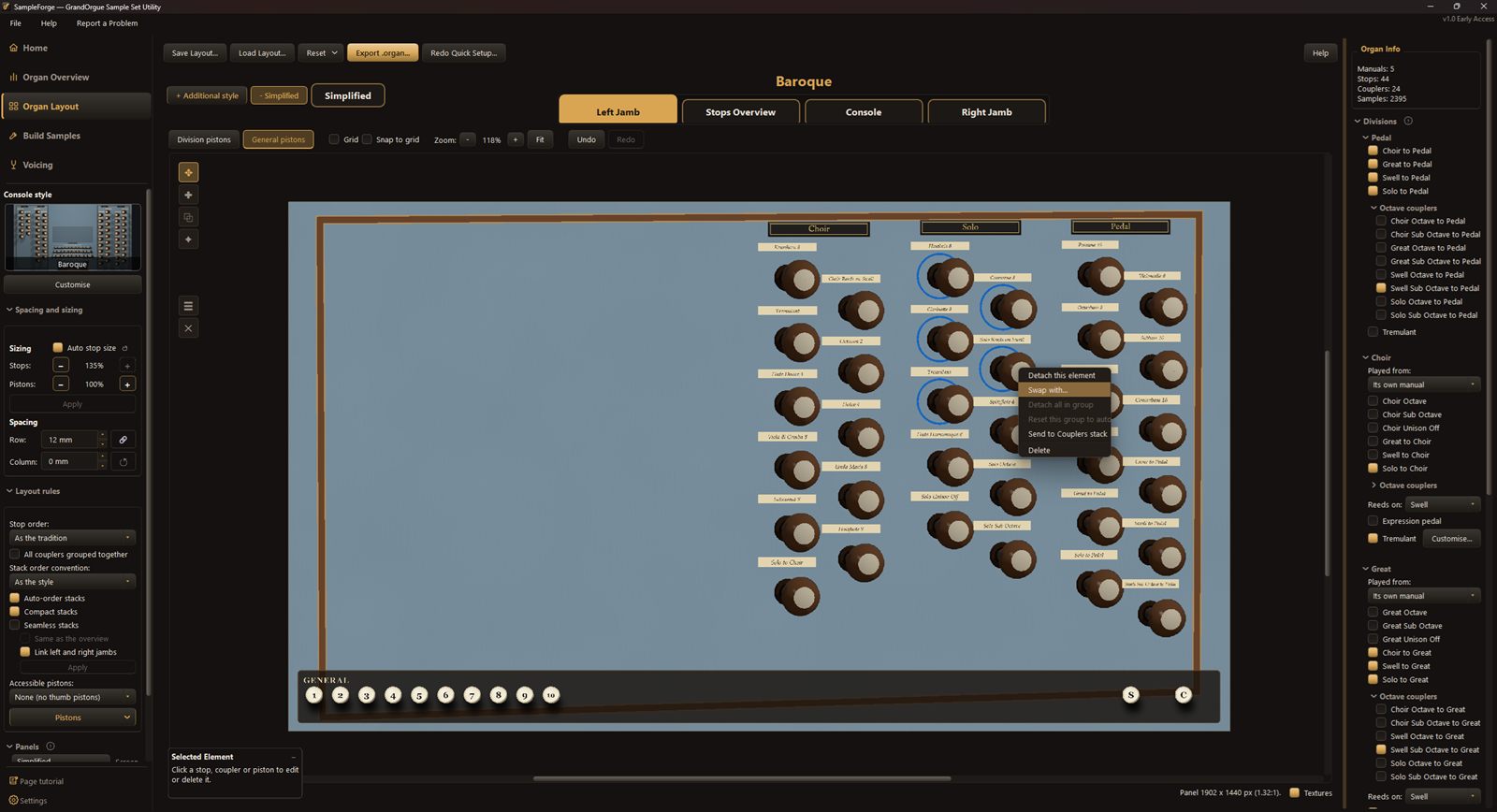
Jambs, drawstops, pistons and key desk in English, French, American, German, Italian, Dutch and tab styles, laid out by each style's conventions. Change size, spacing, order and parts from there. What you see in the editor is what the exported organ shows.
Several panels from one organ
A main console and separate jamb panels from one project. For example, an English drawstop console on the main screen and a simplified, colour-coded stop panel on a touchscreen beside it. The Full edition can also export extra console styles, so you can switch between looks.

Play

Export a ready-to-load organ and play it in GrandOrgue.

Export and play
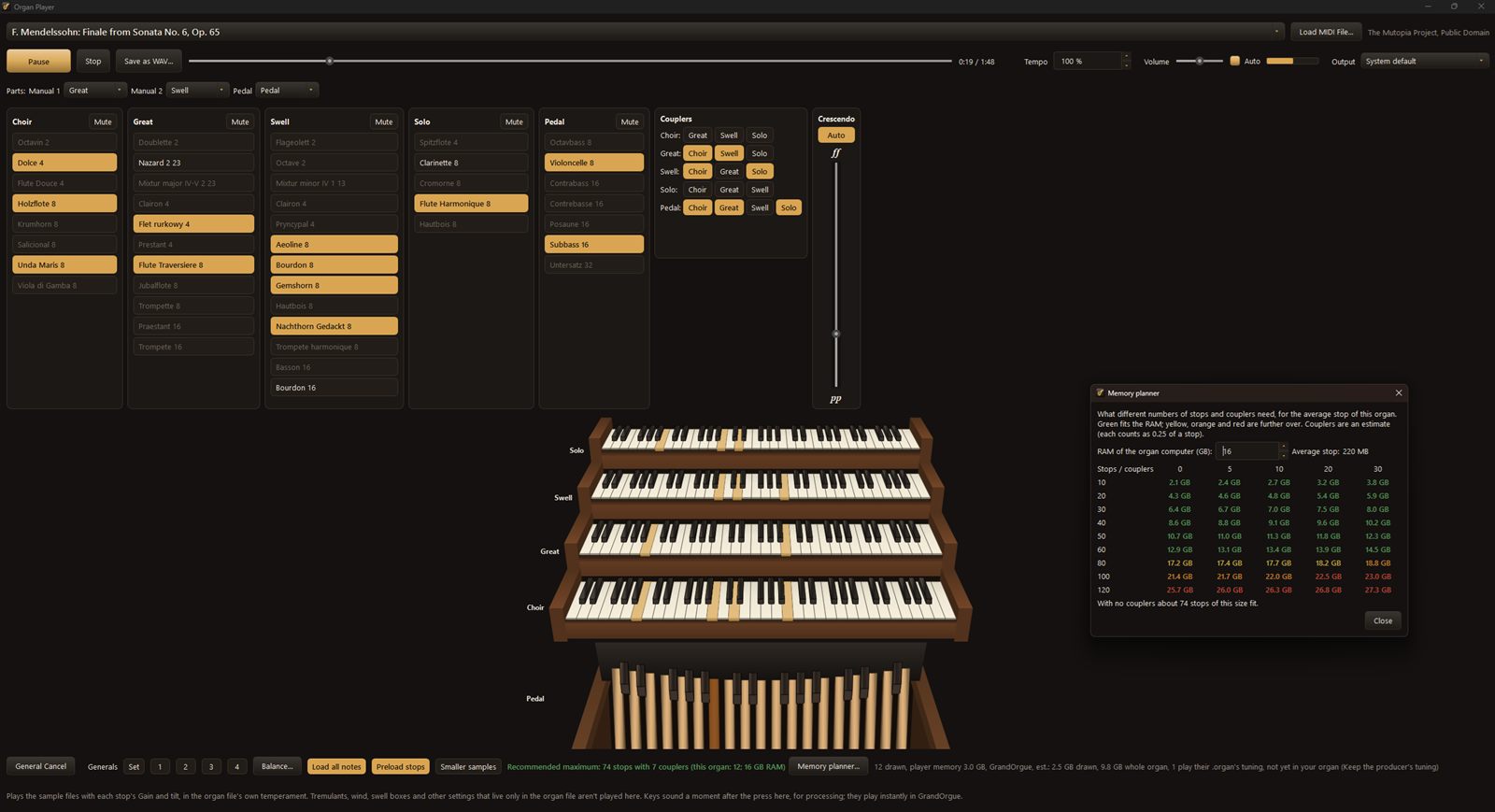
SampleForge writes the organ file, samples and console images in one go. Open the organ in GrandOrgue and play it from your keyboards, with the console you designed on screen. The memory planner shows beforehand how many stops will fit in your organ computer's RAM.
Compatibility
SampleForge runs on Windows and exports organs for GrandOrgue. Hauptwerk export isn't planned for now, but it may be added if there is enough interest.

Hear the difference

Mendelssohn, Finale from Sonata No. 6. The stops come from three different organs, and were all tuned automatically with no human adjustment or tweaking. You get the same result with one click. Both recordings use the same twelve stops throughout.

The piece plays first before tuning, then crossfades to after it has been tuned. Drag the slider, or click Before or After, to hear the difference.

0:000:33

The organ is built from three sample sets by Piotr Grabowski, Friesach, Długa Kościelna and Cracow, St John Cantius, used with his permission. Each set is carefully tuned in its own right. The Before version only sounds out of tune because three organs, each tuned in its own way, are being played together. MIDI file from the Mutopia Project. Both recordings were exported from the Organ Player built into SampleForge, not recorded in GrandOrgue. Audio quality is reduced for playback on the web. The tuning algorithms are still being refined, so the results will only get better before release.

Full feature list

FeatureDemoFull
Ranks, tuning and range

Start from an existing organ file and build on it.

✓✓

Measure every sample for its estimated A, offset in cents and spread across the rank.

✓✓

Bring a selection of stops to one pitch.

✓✓

Change tuning in the organ file and leave the samples as recorded.

✓✓

Fill in missing notes at the top or bottom of a rank, or trim it.

✓✓

Find loop points and write them to the samples.

✓✓

Add as many organ folders as you like and choose stops from each.

⁎ Demo: organs of up to 15 manual stops and 3 pedal stops, on 2 manuals.

✓⁎✓

Equal and historical temperaments, at any pitch.

–✓
Sound and room

Make stops recorded in different buildings sound as if they are being played in the same room.

✓✓

Look for wrong-pipe timbre, tuning against other stops, and the blend of the full organ.

✓✓

Blower and action sounds for the finished organ.

⁎ Demo: the Standard set. Full adds the Tab and Old sets.

✓⁎✓

Listen to single samples and their releases.

⁎ Demo: limited, details to be confirmed.

✓⁎✓

Shape a church or cathedral with sliders, not just presets, then place divisions or stops with distance, level and delay worked out for you.

–✓

Shape, match and correct the tone of a stop.

–✓
Console design

Stops, couplers and pistons placed for you. Change size, spacing and order from there.

✓✓

A main console, separate jamb panels and a simplified stop panel.

✓✓

Arrange pistons and stop slips in grids, with options to rotate, mirror and detach them.

⁎ Demo: accessible pistons are in Full only.

✓⁎✓

English, French, American, German, Italian, Dutch and tab styles. Each is a broad generalisation of that tradition rather than one exact convention.

⁎ Demo: English I and Dutch. Full adds the other styles.

✓⁎✓

Set up divisions and couplers, including divisions played from another manual.

⁎ Demo: divisions and couplers. Divisions played from another manual are in Full.

✓⁎✓

Export more than one console look in the same organ, so you can switch between them in GrandOrgue.

–✓

General and divisional pistons with coupler recall and a Tutti.

–✓

Add decorations and extra elements to any panel.

–✓
Samples, playing and export

Make or replace samples note by note.

✓✓

Rename sample files in one go.

✓✓

Create the missing notes of a rank from the ones you have.

✓✓

Play MIDI files through your stops, with couplers, generals and a crescendo.

⁎ Demo: the included MIDI pieces. Playing your own MIDI files is in Full.

✓⁎✓

Write a ready-to-load GrandOrgue organ.

⁎ Demo: organs of up to 15 manual stops and 3 pedal stops, on 2 manuals.

✓⁎✓

See how many stops will fit in your organ computer's RAM.

–✓

✓ Included · ✓⁎ Included with a limit · – Not included. Click a feature for details.

Bring your own sample sets

You provide the samples. SampleForge VPO doesn't include, sell or download any samples. You bring your own sample sets, their producers still own them, and you may only use them as each set's own licence allows.

Edited samples stay with you. Anything SampleForge changes or creates from a sample set is for your own computer only. Never share, upload or pass it on, even from a free set.

Check each licence. Many producers limit how their samples may be changed, combined or shared. An organ you build with SampleForge VPO is for your own use unless every producer whose samples it contains allows more.

Credit stays with the stop. Every stop keeps a record of the sample set and producer it came from, so you can always see whose work is in your organ.

Edit only where allowed. Not every creator allows the WAV files to be edited. Where they don't, some changes such as tuning, levels and the console can be made in the organ file alone, leaving every sample untouched. Check the licence for these too.

No copy protection removed. Encrypted or protected sample sets aren't supported, and SampleForge VPO never tries to unlock them.

New to sample sets? A good place to start is the free sets by Piotr Grabowski, such as Friesach. Download them from his website, then bring them into SampleForge. They may be edited on your own computer, but edited files must never be shared. Only his free sets may be edited. His paid sets must never have their sample files changed: use SampleForge’s organ-file-only options for them, which leave every file as he supplied it.

The full rules are in our Terms of Use and Sample Rights.

Performance

How long it takes depends mostly on how much retuning your stops need. From a folder of sample sets to a playable organ can take around an hour for a large organ, but it varies a great deal. If the stops are already close in pitch, it can be minutes.

Reusing stops you have already tuned together is quicker still. Building another organ from them takes minutes.

See the detailed breakdown

Typical times were measured on one real stop, a Principal 8' of 58 notes with several release samples each, about 300 WAV files and 400 MB. Larger organs are estimated from that stop.

Why does it take a while? For every stop, SampleForge retunes each sample, analyses its tone, measures and applies reverb, finds loop points and, where needed, extends the range, then writes new sample files. Not every stop needs every step. Typical assumes only a few stops need their range enlarged, and Worst case assumes every stop needs every step, which is rare.

Task1 stop25 stops50 stops100 stops
Quick scan<1 s~4 s~8 s~15 s
Full scan<1 s~7 s~15 s~30 s
Standard workflow (typical)
Retune~6 s~3 min~5 min~10 min
Enlarge range~9 s~4 min~8 min~14 min
Find and write loops~10 s~4 min~8 min~17 min
Standardise reverb~10 s~4 min~8 min~17 min
Total~35 s~15 min~29 min~58 min
Place in a building~5 s~3 min~4 min~8 min
Load into the Organ Player~3 s~1 min~3 min~5 min
Export the organ file~1 s1–3 s2–5 s3–8 s
Memory used in GrandOrgue, lossless compression—~10 GB~16 GB~28 GB
Memory used in GrandOrgue, uncompressed 24 bit—~14 GB~24 GB~44 GB

Measured on a development build with an AMD Ryzen 7 9800X3D (8 cores), 32 GB of RAM and an NVMe SSD. Organ estimates assume stops of a similar size, and stops with more notes or samples take longer. Times depend mostly on the number of processor cores and the speed of the drive your samples are on, so expect them to be longer on a smaller PC. Times include writing the new sample files.

Memory figures include about 4 GB for Windows and GrandOrgue, which stays the same whatever the size of the organ. That is why the figures don’t double when the organ does. The lossless 50-stop figure is from a real organ, and the others are estimated from it and from the test stop, about 400 MB once loaded at 24 bit. Stops vary a lot in size, so treat these as a guide and allow some spare memory.

Limitations

SampleForge can do a lot, but it can’t make a sample set better than it was recorded. These are the limits worth knowing before you start.

See the limitations

Never better than the recording

Every change starts from what the producer recorded. Retuning moves a pipe’s pitch, and large changes can alter its character slightly. Notes made by enlarging a range are built from the neighbouring pipes, so they are close matches, not new recordings. The bigger the change, the more you may hear it.

Dry and wet samples

SampleForge works best with samples, because the room can then be added evenly to every stop. It also works with samples, and most sample sets, especially free ones, are recorded wet.

A recorded room can’t be fully taken out again. SampleForge works around this by matching reverb between stops, but stops from very different buildings will never blend perfectly.

GrandOrgue

Organs are exported for GrandOrgue, so they can only do what GrandOrgue supports. The console is drawn as images with GrandOrgue’s controls on top, and the whole organ is loaded into your computer’s memory when you play it. The memory planner shows what will fit. There is no Hauptwerk export at the moment.

Other limits

  • Windows only, in English for now.
  • Encrypted or copy-protected sample sets can’t be used.
  • The Organ Player is for checking your organ before export. You play the finished organ in GrandOrgue.
  • What you may change is still set by each sample set’s licence.

System requirements

Operating system
Windows 10 or 11
To play your organ
GrandOrgue (free), minimum version to be confirmed
Memory
16 GB of RAM or more recommended for larger organs (see Performance above)
Disk space
Room for new sample files alongside your sets, exact guidance to be confirmed
Sample sets
Your own, used within their licences. None are included

Editions

Demo

Coming soon

  • Free, with no time limit
  • Organs of up to 15 manual stops and 3 pedal stops, on 2 manuals
  • Two console styles
  • Retuning, range, loops and reverb matching

Full

Release date not yet confirmed

  • Every feature in the feature list
  • No stop or manual limits
  • All console styles
  • Stop placement in a building, and combination memory

Compare every feature in the feature list ↑

SampleForge VPO logo

Why I built SampleForge VPO

I grew up in the Anglican choral tradition, first as a young chorister, then all the way through university, and more cathedral singing that took me on tours, introducing me to a wide variety of organs across Europe and North America. The organ was always a keen interest of mine. It is the voice of the liturgy, a concert instrument in its own right, and now, thanks to virtual pipe organs, an instrument we can play at home.

I won't claim to be an organist, but I am a huge organ enthusiast. I started learning the organ at school, but only came back to it as an adult. That was when I discovered virtual pipe organ software such as Hauptwerk and GrandOrgue, first played through my electric piano.

Having since built my own home console, I started to discover the wonderful variety of sample sets that are out there. However, the sets available to me never quite had the organ I wanted. That led me to composite organs, and to editing GrandOrgue organ definition files by hand.

As many of you will know, it's a steep learning curve and not always super user-friendly. My own results rarely looked or sounded as polished as a properly produced sample set. SampleForge started as my own way of making that manual process of editing files easier. It has taken a great deal of time and effort to develop, and with encouragement from friends and family, I've decided to share it. I've waited until now to share its progress and development, because I wanted the early access demo to be something I'm proud of releasing.

I certainly don't know everything about organs, so any feedback on how SampleForge could be better is always welcome. I hope you enjoy it, and that it helps you build the organ you've always wanted to play.

Jon

Questions

Where can I get sample sets?

SampleForge doesn't include any, so you download them from their producers. Piotr Grabowski offers several excellent free sets, including Friesach, which are a good place to start. Only his free sets may be edited. His paid sets must keep their sample files exactly as supplied, so use the organ-file-only options for them. Always follow each producer's own licence.

What kind of sample sets can I use with SampleForge?

SampleForge works with sample sets designed mainly for GrandOrgue and older versions of Hauptwerk, both of which are built from WAV files. Any other samples made up of unencrypted WAV files can also be read and used, if their licence allows it. Encrypted or copy-protected sets can't be used, and SampleForge will not open them.

Does it change my original files?

SampleForge never overwrites your original files without your permission. Changes are written to new sample files, or to the organ file only.

Can I share organs I make?

You can share the SampleForge files of your organ, such as the organ file and project, but never any samples, original or edited. Anyone who wants to play it must download each sample set from its producer themselves. If a producer's licence doesn't allow organ files for its sets to be shared, don't share them. See the Terms.

Can I sell organs I make?

No. Organs, sample sets and anything else made with SampleForge must never be sold or used commercially. This isn't allowed by SampleForge, or by most sample producers. See the Terms.

What's the difference between the Demo and Full?

The Demo is free to use for as long as you like, with no time limit. It includes the core features of SampleForge: building organs, retuning them and designing the console. It has some limits on organ size (up to 15 manual stops and 3 pedal stops, on 2 manuals) and on customisation options. The Full edition removes the size limits and adds more customisation, such as more console styles and placing stops in a building. The feature list shows exactly what's in each.
Does it run on Mac or Linux?

Not at the moment. SampleForge is for Windows 10 and 11. Other operating systems may follow in the future.

Does it export to Hauptwerk?

Not at the moment. SampleForge exports .organ files, the format used by GrandOrgue and a few other organ players. The last version of Hauptwerk to open .organ files was around version 4, so older Hauptwerk installs may be able to open them, though this hasn't been tested. Export for current versions of Hauptwerk may be added in future if there is enough interest.

Do I need GrandOrgue?

Yes. SampleForge is built with GrandOrgue in mind, and GrandOrgue is the only organ player it has been tested with. Other organ players that open .organ files are now available online, but we recommend GrandOrgue. It's free and open source. SampleForge isn't affiliated with the GrandOrgue project.

When will SampleForge be released, and how much will it cost?

SampleForge is being tested right now. A free Demo will be released soon, followed shortly after by an Early Access release of the Full edition, which you'll be able to buy. Dates and prices will be announced once they're confirmed. See News or the YouTube channel.

Was SampleForge made with AI?

Partly, and I'd rather be open about it. SampleForge began over two years ago as my own hand-written code, built to make editing organ files easier. In the last year, AI coding tools have let me move far faster than I could alone. Every change is still checked by me, tested, and listened to on real sample sets before it goes out. No software is perfect, so if you find a mistake, please tell me and I'll fix it.

How do I report a bug or ask for a feature?

Email support@sampleforgevpo.com, with screenshots or log files if you can.

Contact

General questions: hello@sampleforgevpo.com

Bug reports and support: support@sampleforgevpo.com

Build the organ you’ve always wanted to play.